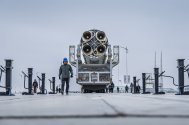
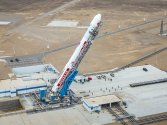
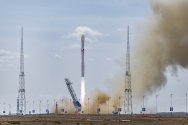
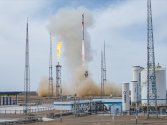
On the CZ-9, in addition to
@sunnymaxi's info on the program being specifically mentioned in the 15th Five-Years-Plan, also recall that
@TheRathalos had posted screenshots of documents about a month or two ago which detailed plans for new land acquisitons and initial infrastructure development in the southern sector of Wenchang (close to current VABs for the CZ-5, CZ-7, and CZ-10); these are almost certainly for the future offices, labs, and VAB(s) of the CZ-9 program. The first phase of the plan runs from March 2026 until March 2027 (with the final phase slated for 2031), although we may not see building structures until later. Also, we've seen photos from a couple of years back of test ring and tank structures with diameters of ~10 metres. Finally the YF-215 has undergone repeated test firings. So the program clearly is well underway (which explains the appearnce of the base CZ-9 models at trade shows).
On the CZ-10A/B, personally I'll be satisfied if either of them debuts this year (in accordance with initial plans). Sometimes it seems like deja-vu (or Ground Hog Day) in this thread when complaints are aired every few weeks about just how far China is behind the US space sector and/or SpaceX, and that it's falling further behind due to the inattention of the State. Well, China acutally is 60 years behind the US, which landed on the Moon in 1969 using in-part the Rocketdyne F-1 engine; and while SpaceX (also Blue Origin and Rocket Lab etc) has done impressive things such as reusability, Merlin, Raptor, Starships etc, it's leveraging 40 years of US rocketery experience (plus 30 years of German pre-WW2 experience). On the other hand, here's China's path:
-- before reusability and CZ-9, it needed to develop and mature cryogenic engines and 3-5 metres rockets based on them,
-- before cryogenic engines and CZ-5/6/7/8, it needed to develop rocketry infrastructure and human talent,
-- before new infrastrucutre/talent, it needed to develop its economy and the talent to train future talent, and allow capital formation,
-- before China could pursue "high quality" economic development, it had to ensure everyone has enough to eat + a basic education,
-- before a base level of food/education, China had to create the space for peace and stability,
-- before peace/stability, China had to end invasions, semi-colonization,
-- before victory over imperialist domination, China needed to value not only the "Classic Texts" but also the scientific/engineering disciplines and to cease sour-grape thinking which relied on the crutch of "Chinese cultural superiorty due to its 5000 years of history" ; also Chinese society needed to stop its casual oppression against peasants and women.
To my mind, that's the unredacted path of Chinese rocketry development; you have to crawl before you can walk. The situation is similar to people in the early 2000's complaining about the lack of Chinese aircraft carriers when the US has a fleet of 11 nuclear carriers. The USS Enterprise (CVN-65) was commissioned in 1961 (trivia: Star Trek's ship and the reference that "there are only 12 like it in Starfleet" directly references the novelty and power of this anticipated new class of US nuclear carriers, which turned into the Nimitz class) at a time when China was just emerging from the Great Leap Forward disaster, and arguably China fell further and further behind the US for the next 50 years in naval development, but this does not mean that China will not be a peer blue-water navy to the US in the 2030's.