The so-called “target ship” (目标舰) has basically turned into an endless one-upmanship gimmick: as long as a ship looks even a little behind the curve or “not advanced enough,” people immediately go, “That’s not the target ship, the target ship is XXX,” and then start making wishes about some future design that might or might not ever materialize. It’s like someone wins 3,000 at the Wynn and feels it’s not enough, then pins all their hopes on the next hand to win another 10,000. It’s a primitive human urge about wealth: more is always better. But reality is not a casino, and equipment R&D is not about chasing “stronger and stronger” for its own sake. It’s about solving real problems under real constraints, and getting as close as possible to “best overall” through constant pushing, pulling, and trade-offs. So even if you win the next hand, what if you only win seven or eight thousand? Do you then go right back to, “That’s still not the target ship, the target ship is XXX”?
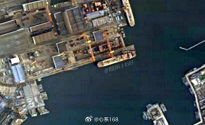
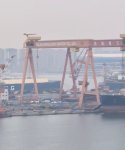
BTW, can anyone really be certain that “00X” can be mass-produced the way the Nimitz was? What if, after the big ship at Xianglu Jiao (香炉礁) is launched, there’s no movement for two or three years across both the south and the north? What if the next big ship built by some yard also ends up as a one-off? What if the “mass-produced” 00X is not the super-super-super-big ship that many people have in mind? I know these hypotheticals sound kind of out there, but who can guarantee that none of this could possibly happen? Can anyone provide enough evidence to actually falsify these possibilities?
Bottom line: don’t “buff the outside world (military) in your own head,” don’t underestimate how determined and effective provincial governments can be about taking ships “back home” after carriers retire, don’t overestimate how incompatible the next generation of shipborne aviation will be (if you really did it that way, the program might just be dead), and definitely don’t assume there’s some “target ship” waiting at the end. Be mentally prepared for the reality that, going forward, each numbered design might have at most two ships of the same class.