00X/004 future nuclear CATOBAR carrier thread

Deino

General
Staff member
Super Moderator
Registered Member
buddy you have had zero response other than "i think it would be enough" sit down


Calm down ! First, it is the 004 carrier thread and as such a flag-ship thread in this section and you for the sake of whatever discuss any nonsense on AD, that the "US as more than enough airdefence to protect its air bases from iranian missiles" and even more your tone even more so against a well-respected senior member is simply NOT appropriate!

Take this as a very clear warning!
 
thats all fine and good but why is anyone risking a multi billion dollar warship on a "should be" when you can double its personal defense with minimal cost increase? any way you cut it the fact is that there is no significant downside to adding more CWIS.
The true cost of adding additional CIWS is not the dollar cost of the actual CIWS but the cost in weight and space - which come at a premium on naval ships. Would you sacrifice a row of VLS cells, capable of holding 16 missiles capable of intercepting missile threats at 50+km for an additional CIWS? CIWS are also much less capable than missiles against many high end threats. You mention the attacks on US bases- you do realize CIWS would have done nothing to intercept those types of threats?
 

Antares545

New Member
Registered Member
Calm down ! First, it is the 004 carrier thread and as such a flag-ship thread in this section and you for the sake of whatever discuss any nonsense on AD, that the "US as more than enough airdefence to protect its air bases from iranian missiles" and even more your tone even more so against a well-respected senior member is simply NOT appropriate!

Take this as a very clear warning!
oh my apologies how could i ever have a "bad" tone against a senior member. i will make sure not to anger my superiors from now on
 

Wrought

Captain
Registered Member
oh my apologies how could i ever have a "bad" tone against a senior member. i will make sure not to anger my superiors from now on

You don't seem to know what you don't know, i.e. missile defense is very complicated and land-based scenarios absolutely cannot be mapped 1:1 onto naval ones and there are in fact quite solid reasons why navies universally build warships the way they do.

Your ignorance is not a problem, ipso facto, but it becomes a problem when you double down on stupidity instead of learning from your mistakes. It's reasonable to ask why, and even speculate to some degree. It's not reasonable to behave as if yours is the only obvious answer (it's not) and proceed to get worked up over the fact that everyone else disagrees (which they are more than justified in doing).

For what it's worth, you should probably read up the survivability onion and consider the inherent tradeoffs involved in emphasizing inner vs outer layers. Physics makes no exceptions, so there is no free lunch.
 
Last edited:

no_name

Colonel
honestly one of the things that annoyed me is how little CWIS are on carriers. like you can easily fit double the amount with minimal cost increases compared the building a whole ass nuclear supercarrier.
same thing bothers me that the 055 only has 2 CWIS. can easily double that amount.
It's a bit like asking why a tank don't mount a second roof machine gun to "double" the protection against the odd guy with an RPG if he manages to get past the infantry defensive screen and other vehicles that should be doing their jobs.
 

taxiya

Brigadier
Registered Member
The Nimitz class has 64 MW electrical power generation ability

Please, Log in or Register to view URLs content!


That does not really math compared to the 104MW of the Ford and the "3x" claim, but apparently the exact quote was more like "3x the excess" so available and not tied up for basic ship operation.

Now the Nimitz has no EMALS, but how much does EMALS actually require?

If we assume 122MJ per launch (heavy aircraft) and 1 launch every 45 seconds for each of the 4 catapults, that should be about 10.84 MW at the fastest possible launch cadence. So even with that extra EMALS requirement, 80MW still seems reasonable?

USN might be a bit too obsessed with the idea of slapping lasers on everything.
Overall, I think Ford has 20MW extra out of 104MW, 80MW is the maximum continious power demand for the intense fighting scenario. I also agree that this 20MW extra was meant for future upgrade especially weapons like laser as USN envisioned earlier.

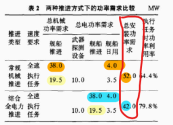
However, 80MW would meet the same requirement if the ship is IEPS/FEP. Ford was designed some decades ago when IEPS/FEP was immature. So the electric generation and propulsion power are independent and separated. In a IEPS ship the propulsion motor (80% of total power of the ship) shares with the rest of the electric consumers. Typically a ship does not sail at its top speed in a fight, so power reserved for top speed can be redirected to other consumers. So in IEPS ship, that 20MW (dedicated in Ford) non propulsion power is drawn from the surplous of propulsion. This is reflected in a PLAN study on IEPS frigate. As a rule of thumb the total installed power of IEPS ship of the same mission is 80% of its conventional driven counterpart, as illustrated in the following table 42/52.
1779907497707.png

This is roughly saying that Ford's 104MW = 80MW of an IEPS equivalent even considering any future upgrade of laser etc.

Note, I am not suggesting 004 being an IEPS/FEP, but only presenting the technical possibility for a 80MW installed powerplant doing the same job.

 

AndrewS

Brigadier
Registered Member
Overall, I think Ford has 20MW extra out of 104MW, 80MW is the maximum continious power demand for the intense fighting scenario. I also agree that this 20MW extra was meant for future upgrade especially weapons like laser as USN envisioned earlier.

However, 80MW would meet the same requirement if the ship is IEPS/FEP. Ford was designed some decades ago when IEPS/FEP was immature. So the electric generation and propulsion power are independent and separated. In a IEPS ship the propulsion motor (80% of total power of the ship) shares with the rest of the electric consumers. Typically a ship does not sail at its top speed in a fight, so power reserved for top speed can be redirected to other consumers. So in IEPS ship, that 20MW (dedicated in Ford) non propulsion power is drawn from the surplous of propulsion. This is reflected in a PLAN study on IEPS frigate. As a rule of thumb the total installed power of IEPS ship of the same mission is 80% of its conventional driven counterpart, as illustrated in the following table 42/52.
View attachment 175669

This is roughly saying that Ford's 104MW = 80MW of an IEPS equivalent even considering any future upgrade of laser etc.

Note, I am not suggesting 004 being an IEPS/FEP, but only presenting the technical possibility for a 80MW installed powerplant doing the same job.

IEPS makes sense if you have limits in terms of space/fuel on a warship, so you accept a negligible reduction in top speed for a few minutes, whilst the electricity is diverted towards radars/lasers/EW etc.

---

But IEPS would be a significant risk on a nuclear-powered aircraft carrier, which has no fuel limitation for propulsion, and there's no cost difference compared to running the reactor at 50% or 100% capacity.

Also, the additional electricity load during combat might be 20MW at maximum? (Assuming four 600kW lasers and some really heavy duty radars/EW)

That isn't that much, when you consider a Ford has 1400MW of reactor output, presumably at 30-38% efficiency.
 

taxiya

Brigadier
Registered Member
IEPS makes sense if you have limits in terms of space/fuel on a warship, so you accept a negligible reduction in top speed for a few minutes, whilst the electricity is diverted towards radars/lasers/EW etc.

---

But IEPS would be a significant risk on a nuclear-powered aircraft carrier, which has no fuel limitation for propulsion, and there's no cost difference compared to running the reactor at 50% or 100% capacity.

Also, the additional electricity load during combat might be 20MW at maximum? (Assuming four 600kW lasers and some really heavy duty radars/EW)

That isn't that much, when you consider a Ford has 1400MW of reactor output, presumably at 30-38% efficiency.
You are only talking about one of the two matters of the drivetrain, the energy, in that case CVN doesn't really need IEPS because of nearly infinite energy. But IEPS has two advantages over convensional drivetrain: 1. energy saving, increasing range. 2. power saving by 20% or power boost by 20% if installed power is the same. IEPS always has that 20% power advantage regardless what the energy source is. 20% is a lot and there is reduced footprint and maintanance work, reliability, survivability etc. accompanying gains.

BTW, naval nuclear power plant's efficiency is always at the lower end of the range, just above 30% is the safe bet.
 

AndrewS

Brigadier
Registered Member
You are only talking about one of the two matters of the drivetrain, the energy, in that case CVN doesn't really need IEPS because of nearly infinite energy. But IEPS has two advantages over convensional drivetrain: 1. energy saving, increasing range. 2. power saving by 20% or power boost by 20% if installed power is the same. IEPS always has that 20% power advantage regardless what the energy source is. 20% is a lot and there is reduced footprint and maintanance work, reliability, survivability etc. accompanying gains.

BTW, naval nuclear power plant's efficiency is always at the lower end of the range, just above 30% is the safe bet.

If I look at the graphic, it looks like the power requirements for a Type-052D sized ddestroyer:

38MW for full speed propulsion.
4MWe hotel load
10MWe combat load

And during combat, energy supplied to propulsion is cut in half.

The definition of "efficiency gain" looks like it comes from the 10MWe of combat load 10/52=20%. That means total installed power could be 20% less for a Type-052D.

But lets say the combat load doubles to 20MW. It's now 20/62 which is a 32% reduction in total installed power.

---

But for a Nimitz, the calculation is more like a maximum of 10MW of combat load on a total loading of about 250MW. So that would only be a 4% reduction in total installed power required.

---
So the efficiency gain is highly dependent on what the combat load is.
 
Top