
You are using an out of date browser. It may not display this or other websites correctly.
You should upgrade or use an alternative browser.
You should upgrade or use an alternative browser.
US Military News, Reports, Data, etc.
- Thread starter tphuang
- Start date
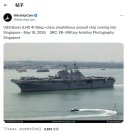

13th time’s the charm, I suppose.the General Dynamics Wolf and American Rheinmetall Lynx IFVs that are competing for the XM30 Mechanized Infantry Combat Vehicle (MICV) program to replace the Bradley IFV.



Lethe
Captain
From the 09V/09VI thread. Replying here as it is mostly an American discussion.
I think folks tend to over-index on VLS in submarine design, particularly in the American context. As you say, the Ohio SSGNs were an opportunistic innovation, . Seawolf dispensed with that makeshift solution in favour of more torpedo tubes and a much deeper primary magazine (same characteristics were pursued by the UK's Astute-class, albeit on a smaller scale) while Virginia inherited many of its basic characteristics from the earlier 688s.
There's no doubt that submarine-launched missiles are useful and VLS can be a sensible means of packaging them. The Ohio-class SSGNs were a good way to make use of otherwise excess SSBN hulls that had already been constructed. It's less clear that building the same four boats from scratch would've been a sensible allocation of resources compared to building eight more SSNs. Virginia Block V with VPM traces directly to the anticipated requirement to replace the VLS capacity that would be lost with eventual retirement of those opportunistic SSGNs. It is asserted that VPM-equipped Virginias require 25% more work than non-VPM Virginias. In the broader context of production challenges and inventory requirements, I think one could plausibly regard VPM as an unforced error. The Ohio SSGNs were a product of the 1990s and early-2000s, the post-Cold War era. Although VPM wasn't nailed down until relatively recently (with the first equipped boat scheduled to enter service only in 2029), the basic concept and rationale also dates to the late 2000s. That is to say, it can plausibly be viewed as an extension of the post-Cold War, "War on Terror" era that birthed the SSGNs in the first place. The future SSN(X), which is assuredly a product of the "peer competitor" era, reportedly calls for a shift away from VLS to a larger torpedo room and deeper primary magazine. Sound familiar?
TL;DR: VLS is over-indexed as a feature of modern submarine design, and one that has arguably misled USN itself. The Soviet/Russian model provides a better (which is not to say that it is perfect) analogue for China.
On the prospects of a 09VI SSGN variant
I see a lot of comparisons being made between a notional 09VI SSGN version and the Ohio-class SSGN. It is worth noting that the Ohio-class SSGNS were not actually purposely-built. They are the result of the USN choosing to reduce its SSBN fleet down to 14 boats after 18 have already been built, partly due to treaties with Russia. In fact, the four "extra" boats were initially slated to be retired prior to being reactivated for SSGN conversion. AFAIK, these Ohio SSGNs are the only SSGNs that are built from SSBN hulls. Even the Russians have seemingly delegated SSGN tasks to their Yasen SSNs so as to combine the SSN/SSGN roles into one hull.
If China really wanted, she could commission a "stretched" variant of the 09V or even convert the old 09IVs into SSGNs, but given the emphasis of the PLAN on anti-shipping rather than expeditionary land-attack duties, these are unlikely prospects. For the time being, given the doctrine of the PLAN and the naval force structure that supports it, 24 VLS cells on the 09IIIB and 09V would be more than sufficient.
I think folks tend to over-index on VLS in submarine design, particularly in the American context. As you say, the Ohio SSGNs were an opportunistic innovation, . Seawolf dispensed with that makeshift solution in favour of more torpedo tubes and a much deeper primary magazine (same characteristics were pursued by the UK's Astute-class, albeit on a smaller scale) while Virginia inherited many of its basic characteristics from the earlier 688s.
There's no doubt that submarine-launched missiles are useful and VLS can be a sensible means of packaging them. The Ohio-class SSGNs were a good way to make use of otherwise excess SSBN hulls that had already been constructed. It's less clear that building the same four boats from scratch would've been a sensible allocation of resources compared to building eight more SSNs. Virginia Block V with VPM traces directly to the anticipated requirement to replace the VLS capacity that would be lost with eventual retirement of those opportunistic SSGNs. It is asserted that VPM-equipped Virginias require 25% more work than non-VPM Virginias. In the broader context of production challenges and inventory requirements, I think one could plausibly regard VPM as an unforced error. The Ohio SSGNs were a product of the 1990s and early-2000s, the post-Cold War era. Although VPM wasn't nailed down until relatively recently (with the first equipped boat scheduled to enter service only in 2029), the basic concept and rationale also dates to the late 2000s. That is to say, it can plausibly be viewed as an extension of the post-Cold War, "War on Terror" era that birthed the SSGNs in the first place. The future SSN(X), which is assuredly a product of the "peer competitor" era, reportedly calls for a shift away from VLS to a larger torpedo room and deeper primary magazine. Sound familiar?
TL;DR: VLS is over-indexed as a feature of modern submarine design, and one that has arguably misled USN itself. The Soviet/Russian model provides a better (which is not to say that it is perfect) analogue for China.

For the PLAN, the primary anti-ship weapons are YJ-17, YJ-19 and YJ-20, all are VLS-launched. Torpedoes are most likely for self-defense only.From the 09V/09VI thread. Replying here as it is mostly an American discussion.
I think folks tend to over-index on VLS in submarine design, particularly in the American context. As you say, the Ohio SSGNs were an opportunistic innovation, . Seawolf dispensed with that makeshift solution in favour of more torpedo tubes and a much deeper primary magazine (same characteristics were pursued by the UK's Astute-class, albeit on a smaller scale) while Virginia inherited many of its basic characteristics from the earlier 688s.
There's no doubt that submarine-launched missiles are useful and VLS can be a sensible means of packaging them. The Ohio-class SSGNs were a good way to make use of otherwise excess SSBN hulls that had already been constructed. It's less clear that building the same four boats from scratch would've been a sensible allocation of resources compared to building eight more SSNs. Virginia Block V with VPM traces directly to the anticipated requirement to replace the VLS capacity that would be lost with eventual retirement of those opportunistic SSGNs. It is asserted that VPM-equipped Virginias require 25% more work than non-VPM Virginias. In the broader context of production challenges and inventory requirements, I think one could plausibly regard VPM as an unforced error. The Ohio SSGNs were a product of the 1990s and early-2000s, the post-Cold War era. Although VPM wasn't nailed down until relatively recently (with the first equipped boat scheduled to enter service only in 2029), the basic concept and rationale also dates to the late 2000s. That is to say, it can plausibly be viewed as an extension of the post-Cold War, "War on Terror" era that birthed the SSGNs in the first place. The future SSN(X), which is assuredly a product of the "peer competitor" era, reportedly calls for a shift away from VLS to a larger torpedo room and deeper primary magazine. Sound familiar?
TL;DR: VLS is over-indexed as a feature of modern submarine design, and one that has arguably misled USN itself. The Soviet/Russian model provides a better (which is not to say that it is perfect) analogue for China.
This is not the case with US Navy. So VLS for American subs aren't as important for as for the PLA subs.
Lethe
Captain
For the PLAN, the primary anti-ship weapons are YJ-17, YJ-19 and YJ-20, all are VLS-launched. Torpedoes are most likely for self-defense only.
This is not the case with US Navy. So VLS for American subs aren't as important for as for the PLA subs.
Anti-ship missiles have a significant role to play in both Soviet/Russian and PLAN requirements. But I don't believe that has or should come at the expense of torpedoes. That the Soviets evidently perceived great value in their SSGNs did not preclude them from also developing the massive Type 65 torpedo for use against large surface vessels. Torpedoes will tend to be more devastating in their effects as they explode under the waterline, and they are arguably both more difficult to detect once fired and more difficult to defeat once detected. The advantage of missiles is that they allow the submarine to engage the target at greater distance. This both offers the submarine some measure of protection from more intensive anti-submarine warfare measures closer to the target, and eases the task of achieving a firing position in the first place. These characteristics are particularly attractive for a technologically inferior actor which has low confidence in achieving a torpedo firing solution undetected. But if that firing position can be achieved, a salvo of heavyweight torpedoes is more likely to put an HVU on the bottom of the ocean than a salvo of missiles. Submarine-launched anti-ship missiles undoubtedly play a significant role, but they are not the only or best tools for the task in all circumstances, particularly if PLAN is in fact confident of achieving world-class levels of submarine quieting.
Last edited:
If the C4ISR allows a sub to attack an adversary’s surface targets from 1000km+ away, why would it risk, no matter how low, getting close to torpedo range of its targets regardless of its tech level?These characteristics are particularly attractive for a technologically inferior actor which has low confidence in achieving a torpedo firing solution undetected. But if that firing position can be achieved, a salvo of heavyweight torpedoes is more likely to put an HVU on the bottom of the ocean than a salvo of missiles.
Lethe
Captain
If the C4ISR allows a sub to attack an adversary’s surface targets from 1000km+ away, why would it risk, no matter how low, getting close to torpedo range of its targets regardless of its tech level?
We've both handwaved the more difficult parts of the problem. For a torpedo attack, the limiting factor is the ability to reach a firing position undetected. For missiles, the limiting factor is having the precise and timely intelligence to support that more distant attack, which typically requires coordination with offboard assets. Plausibly, one of the sources for the intelligence required to support that attack is an SSN that is close enough to maintain eyes on the target. To take the argument to the other extreme, if you're confident enough in your omniscient offboard C4ISR capabilities, why do you need an extremely expensive nuclear-powered SSGN at all when surface combatants can carry the same payloads at comfortably less than half the cost-per-missile? (Of course, strategic bombers and land-based missiles are also competing to utilise that omniscient C4ISR). The virtue of a nuclear-powered submarine is that, periodic communications notwithstanding, it is a persistent and autonomous hunter, but that only works insofar as the boat can actually track and engage the target independently. As a weapon, torpedoes are better matched to the onboard sensing capabilities of submarines than are missiles. Submarines can usefully prosecute certain varieties of missile attack of their own accord, but certainly not from 1000km+ away. In any case, my point is not that heavyweight torpedoes are the superior anti-ship option in all circumstances, but that they remain a valuable tool in the toolbox.
Last edited:
We've both handwaved the more difficult parts of the problem. For a torpedo attack, the limiting factor is the ability to reach a firing position undetected. For missiles, the limiting factor is having the precise and timely intelligence to support that more distant attack, which typically requires coordination with offboard assets. Plausibly, one of the sources for the intelligence required to support that attack is an SSN that is close enough to maintain eyes on the target. To take the argument to the other extreme, if you're confident enough in your omniscient offboard C4ISR capabilities, why do you need an extremely expensive nuclear-powered SSGN at all when surface combatants can carry the same payloads at comfortably less than half the cost-per-missile? (Of course, strategic bombers and land-based missiles are also competing to utilise that omniscient C4ISR). The virtue of a nuclear-powered submarine is that, periodic communications notwithstanding, it is a persistent and autonomous hunter, but that only works insofar as the boat can actually track and engage the target independently. As a weapon, torpedoes are better matched to the onboard sensing capabilities of submarines than are missiles. Submarines can usefully prosecute certain varieties of missile attack of their own accord, but certainly not from 1000km+ away. In any case, my point is not that heavyweight torpedoes are the superior anti-ship option in all circumstances, but that they remain a valuable tool in the toolbox.
For the next 15+ years, surface warships realistically won't be able to reach past Hawaii.
In comparison, yes, SSGNs will be a lot more expensive to deliver missiles, but they should be able to sail undetected to reach the US West Coast and even the US East Coast