China's SCS Strategy Thread

plawolf

Lieutenant General
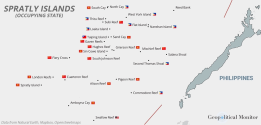
View attachment 175059View attachment 175060View attachment 175058
From the lack of tire marks on the runway, it seems like the SCS air bases barely ever gets used. There doesn't seem to be any fighter or otherwise brigades based in any of the SCS islands, it just seems like every few months or so a brigade gets temporary rotated here for a few days or weeks before leaving.

This does seem to follow the rumors that PLAAF/PLAN is having trouble basing aircraft long term on these islands due to proximity to the sea.

There is no real need or justification to deploy manned fighters there routinely. Fuel to the bases need to be shipped in to support operations. Also, the high salt sea breeze on the islands are highly corrosive to any aircraft deployed there, even with fully enclosed shelters. The only way to mitigate that corrosion is to wash down the jets regularly, which uses up valuable fresh water resources. Routinely forward deploying fighters to the islands also exposes them to being alpha struck in the opening moves of any fight. And finally, there are diplomatic and political considerations to deploying fighters there regularly.

The costs just do not remotely justify the need to have manned fighters there. What are those fighters supposed to do anyways? With RoEs in place, there’s not much even manned fighters can do about cheap turboprop harassment flights from the Philippines or recon fights from US allies.

Those air bases are there as insurance, and just like other insurance, it’s not something you use normally when everything is going normally, but it’s something you will desperately regret not having if something goes horribly wrong.

The everyday value of the islands comes from the support facilities they provide to maritime assets and the permanent presence they represent to allow China to keep a close eye on the region to get timely intelligence of any malfeasance and allow rapid intervention and counters.
 

Blitzo

General
Staff member
Super Moderator
Registered Member
View attachment 175059View attachment 175060View attachment 175058
From the lack of tire marks on the runway, it seems like the SCS air bases barely ever gets used. There doesn't seem to be any fighter or otherwise brigades based in any of the SCS islands, it just seems like every few months or so a brigade gets temporary rotated here for a few days or weeks before leaving.

This does seem to follow the rumors that PLAAF/PLAN is having trouble basing aircraft long term on these islands due to proximity to the sea. Though I don't really agree with the claims that the operating environment on these islands is somehow worse than on carriers, so IMO it may be possible to base naval air brigades on these islands in the future.

I don't think it necessarily has anything to do with having "trouble" basing them there in the sense of the island bases viability as airbases per se.

Instead it is just a reality that naturally there are some costs to basing aircraft versus basing them elsewhere-- of course the environment is much more maritime in nature. Not to mention you'll inevitably have a longer logistics line.

Then there is the question of what the value of a permanent, meaningful presence on the air bases actually are. In peacetime there usually wouldn't be a reason to base much of a force there except for maybe occasionally a token MPA or AEWC element (and even then you don't need all of the island bases to host them, just one).

In times of higher anticipated tension, it would be very easy to rapidly deploy multiple air task forces to the relevant bases without incurring those aforementioned costs of a permanent presence, while also allowing actual deployments to act as more thorough political signalling (a permanent basis there would likely do a combination of long term spooking less-hostile SCS nations, while causing the more hostile SCS nations to just become desensitized to their presence).
 

Confusionism

Junior Member
Registered Member
View attachment 175059
From the lack of tire marks on the runway, it seems like the SCS air bases barely ever gets used. There doesn't seem to be any fighter or otherwise brigades based in any of the SCS islands, it just seems like every few months or so a brigade gets temporary rotated here for a few days or weeks before leaving.

This does seem to follow the rumors that PLAAF/PLAN is having trouble basing aircraft long term on these islands due to proximity to the sea. Though I don't really agree with the claims that the operating environment on these islands is somehow worse than on carriers, so IMO it may be possible to base naval air brigades on these islands in the future.
I don't think there are any big environmental challenges with having air units on the artificial islands in the Spratly Islands in the long term, compared to Woody Island in the Paracel Islands.

I believe the main factor is political. Unlike the Paracel Islands, the Spratly Islands are a more sensitive issue when it comes to militarization. Furthermore, unlike the Paracel Islands, most of the artificial islands in the Spratly Islands are located in close proximity to islands occupied by other countries, and stationing military aviation unit there on a permanent basis during peacetime would certainly increase the likelihood of tensions.
1778851192542.png
 

00CuriousObserver

Senior Member
Registered Member
China has repeatedly stated that the SCS should develop “peacefully.” That “peacefully” part should not be taken as lightly as some seem to be taking it.

Strategically, imo there won't be "big developments" until the Taiwan question is solved. What the PH has been doing might be considered annoying, but it doesn't change the grand scheme of things.
 

plawolf

Lieutenant General
China has repeatedly stated that the SCS should develop “peacefully.” That “peacefully” part should not be taken as lightly as some seem to be taking it.

Strategically, imo there won't be "big developments" until the Taiwan question is solved. What the PH has been doing might be considered annoying, but it doesn't change the grand scheme of things.

China’s SCS investments and defences are not meant for anyone in the region, not directly or totally anyways as it would be ludicrously overkill for any or even all of the other claimants combined.

OTOH, Chinese will and ability to deploy forces into the region isn’t constrained by other operational needs either.

That means that after the Taiwan and Japan questions have been adequately addressed, it would be even more unlikely that China would need to or want to forward deploy significant military assets or forces.

Those SCS island bases are there primarily to ensure that China’s shipping lanes through the SCS can never be seriously threatened by hostile military forces. So long as no one is stupid enough to try that, then there is little reason for China to need to forward deploy major forces permanently.
 

Wrought

Captain
Registered Member
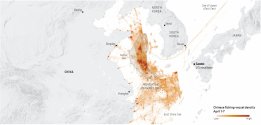
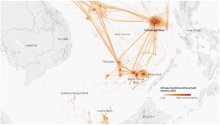
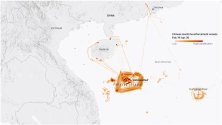
Some relevant graphics of maritime traffic across the region.

“They’re not trying to start a war. On the contrary, they’re trying to do just the opposite, which is to exercise influence in ways that do not provoke a confrontation,” said Victor Cha, Korea Chair at CSIS. “But in the end, when everything is aggregated, they are the dominant presence, [and] everybody defers to them.”

region.JPG
scarborough.JPGantelope.JPG

Please, Log in or Register to view URLs content!
 

GulfLander

Brigadier
Registered Member
google translated (seems about Sandy Cay)

Vietnam opposes the activities of China and the Philippines in the Spratly Islands.​

Vietnam demands that all relevant parties respect Vietnam's sovereignty over the Spratly Islands, in its comments on the activities of China and the Philippines at Hoai An Reef.
Please, Log in or Register to view URLs content!
 

00CuriousObserver

Senior Member
Registered Member
Comment from Hole Hole:

The laws of physics and chemistry do not selectively spare one island or reef over another. Aviation equipment faces the same harsh natural environment and the same high rate of wear in all these places. Mischief Reef and Subi Reef do not have fighter aircraft while Woody Island does simply because Woody Island is closer, which makes support and maintenance somewhat easier. That is all there is to it. Even so, the aviation units on Woody Island are only small detachments rotating in and out. Large, fully organized units are not permanently stationed there.

The Spratly Islands are simply too far away, so far that many netizens living in inland provinces have no intuitive sense of the distance. Even the distance between the three airfields at Fiery Cross Reef, Subi Reef, and Mischief Reef, all within the Spratly Islands, is already nearly comparable to the distance from Woody Island in the Paracels to Hainan Island.

The front line of the contest with the Philippines is Mischief Reef. If Philippine aircraft come over to harass, and alert aircraft have to scramble from Woody Island to intercept them, the distance involved is roughly three times the distance of flying back to Hainan Island. It is even farther than flying back to the mainland as far as Guangzhou. Put another way, a single interception like this, even if the aircraft arrive on scene and immediately turn back without loitering, would involve a round trip equivalent to making five shuttle runs between a forward airfield in Fujian and the coast of Taiwan.

That should give people some sense of just how vast the sea and airspace of the South China Sea really are. As a result, relying on the Paracels to support airspace responses in the Spratlys imposes very tight limits on reaction time, which naturally places extremely high demands on intelligence, surveillance, and early warning capabilities.

Of course, deploying fighters in the Spratlys would certainly make it easier to handle similar situations. But the point of building forward bases is not that they must be used as soon as they are built. The point is to have them available when needed, and to have high-standard facilities ready for use.

The distance from the Spratly airfields to Hainan or Guangdong is comparable to, or even greater than, the distance from Russia to Syria’s Hmeimim Air Base. Maintaining forces with enough deterrent value against U.S.-Philippine forces in such a remote location would impose a logistical burden no less than operating an overseas base.

If the situation has not yet escalated to that point, would actively getting bogged down there amount to being led by the nose? Would the other side then use this as an entry point to keep draining us, tying down ever-greater Chinese investment through low-cost provocations? These are all issues that have to be considered.

To put it simply: there is no technically insurmountable obstacle to deploying fighters in the Spratly Islands. But whether to do so depends on a cost-benefit judgment of cost versus necessity. That balance is dynamic and changes with the situation.
 
Top