Milink Technology (reported as Rilian Technology in the text) is poised for outstanding results in 2025, driven by surging revenue and net profit alongside booming cash flow operations. The company reported a year-on-year revenue increase of 45.77% to reach RMB 1 billion, with net profit climbing 22.84% to RMB 176 million. Excluding non-recurring items, the adjusted net profit grew even more robustly by 51.34%. Most notably, operating cash flow surged by an impressive 512.23%, reaching RMB 192 million, signaling a significant improvement in liquidity. Reflecting this strong financial performance, the company plans to distribute cash dividends totaling over RMB 98.6 million and repurchased shares worth approximately RMB 10 million, amounting to 61.76% of its annual net profit.
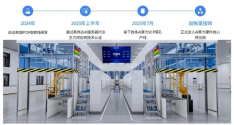
Rilian Technology operates as a leading domestic supplier in industrial intelligent inspection equipment, specializing in X-ray technology for sectors including integrated circuits, new energy batteries, casting, and food safety. The current reporting period marked a pivotal expansion phase where the company successfully launched into new downstream scenarios while solidifying a global layout described as "3 major domestic bases + 3 major overseas bases." This strategy involves establishing R&D and production hubs in Wuxi, Chongqing, Shenzhen, alongside an overseas headquarters in Singapore and facilities in Malaysia, Hungary, and the United States. With products now sold across over 70 countries, the company has achieved full operationality in all its international locations, creating new growth drivers for future performance.
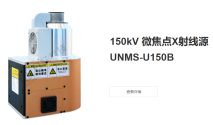
A cornerstone of the company's recent success is the industrialization of its core X-ray sources, which possess high technological barriers to entry.
The firm achieved full-spectrum coverage of product types—including closed-tube microfocus, open-tube, and high-power small-focus sources—and became the only domestic player to master key material control, complex manufacturing processes, and reliability verification for these components. During the period, it introduced ten new X-ray source products, including batch-shipped nanoscale open-tube and high-power models, while increasing its self-use penetration rate and independent external sales volume. This breakthrough in core components has facilitated the widespread domestic substitution of previously imported technologies.
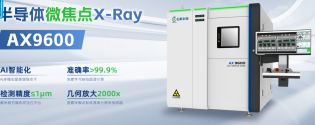
 Beyond core components, Rilian Technology continues to iterate its testing equipment portfolio, which now exceeds 100 standardized models with full coverage of 3D/CT capabilities. Specific applications highlight the company's versatility: high-multilayer PCB inspection equipment enables visualized internal imaging and back-drilling quality control; advanced semiconductor packaging tools utilize sub-micron resolution for defect identification in online production lines; liquid-cooled plate inspections verify flow channels and welding integrity; optical module testing ensures precision on chips and fiber alignment; and solid-state battery testers monitor internal structures and defects.
 These solutions have already been deployed or are undergoing verification with major industry players such as Shenghong Technology, Qingtao Energy, and Guansheng Dongchi.
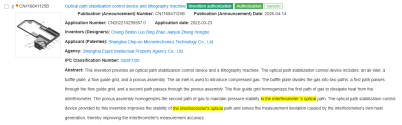
To sustain long-term growth, the company is executing a dual strategy of horizontal expansion and vertical deepening through mergers and acquisitions (M&A). Vertically, it has strengthened its capabilities in submicron and high-power X-ray sources by acquiring Zhuhai Jiuyuan, which completed business registration as a holding subsidiary in August 2025. Following the completion of Zhuhai Jiuyuan's new factory in late November 2025, the company is capitalizing on the explosive growth of the energy storage sector to launch globally first-in-class 15MW matrix testing systems. Horizontally, through investments and acquisitions like Creative Electronics (USA), SSTI (Singapore), Mife Technologies, Yifeng Electronics, and Ultramicro Measurement, Rilian Technology is diversifying into optical, ultrasonic, magnetic particle, and semiconductor failure analysis technologies, effectively building a comprehensive platform-based industrial testing capability across multiple industries.