PLA Strategy in a Taiwan Contingency

ougoah

Brigadier
Registered Member
Well Iran has had no trouble hitting multiple US regional airbases, destroying multiple static radar and EW sites and obliterating a US navy facility in Bahrain. This is all Iran not even trying to go at the US forces themselves, just the peripheral tools used by the empire.

Iran is unable to do much more because US military action against Iran is launched out of bases and carriers well outside the reach of effective Iranian fire. They have some token pieces of equipment that theoretically have those ranges but have them in terribly small numbers and questionable effectiveness, particularly when they have nothing else to back up those attacks like ... an airforce of navy of substance and modernity. Yet those drones and ballistic missiles were exceptionally effective at neutering US equipment within their effective ranges and US air defenses have not been able to stop drones and ballistic missiles.

China is about the economic, industrial, productive and military weight of 1000 Irans. Technology is not on such a single dimension but Iran the nation has close to no technology of merit that's beyond 1990s except for a few niche fields. Yet they have been the only force in modern history to beat the US senseless wherever they are within reach on the ground. Iran unfortunately does not have air power to counter the US and Israel in the air and its air defenses are only useful at making operations for Israel and US a little harder and losing some UAVs once in a while.
 

Temstar

Brigadier
Registered Member
I think a more interesting mind frame to look at the lesson from the Iran war would be suppose China is US and ROC is Iran. Even if PLA is able to wipe out ROCN and ROCAF during the open days of AR if ROC hits back at China in similar fashion as Iran with ballistic/cruise missiles and flying mopeds, just how well could PLA defend against that and weather the performance would be better than how US/Israel is handing it.
 

lcloo

Major
I think a more interesting mind frame to look at the lesson from the Iran war would be suppose China is US and ROC is Iran. Even if PLA is able to wipe out ROCN and ROCAF during the open days of AR if ROC hits back at China in similar fashion as Iran with ballistic/cruise missiles and flying mopeds, just how well could PLA defend against that and weather the performance would be better than how US/Israel is handing it.
That is very plausible. Small drones can be easily hidden in the mountains and launch at any locations. However, any ROC ballistic/cruise missile can be much easier to locate since Taiwan is a relatively small island, and any launch of these missiles could be detected and trace back to its base by PLA's aerial sensing platforms.

China has paid much attention on development of drone and Anti-drone weapons so they should be in much better prepared position than the US and Israelis in current war with Iran. And they always learn by observation on wars fought by others, so the current war will give much input to PLA.

We shall see what new additions on drone/anti-drones in the coming Zhuhai 2026 show. I am hoping there will be new anti-drone laser/microwave/EW etc.
 

GZDRefugee

Senior Member
Registered Member
I think a more interesting mind frame to look at the lesson from the Iran war would be suppose China is US and ROC is Iran. Even if PLA is able to wipe out ROCN and ROCAF during the open days of AR if ROC hits back at China in similar fashion as Iran with ballistic/cruise missiles and flying mopeds, just how well could PLA defend against that and weather the performance would be better than how US/Israel is handing it.
The opposite also applies. What's stopping China from thoroughly saturating Taiwan's airspace with missiles and loitering munitions? How well can Taiwan defend against 24/7 drone overflights and mitigate degradation?
 

Temstar

Brigadier
Registered Member
The opposite also applies. What's stopping China from thoroughly saturating Taiwan's airspace with missiles and loitering munitions? How well can Taiwan defend against 24/7 drone overflights and mitigate degradation?
Well this one is easy, not very well.
I don't actually think ROC's armed forces are anywhere near as capable as IRGC if they had to fight under mosaic warfare conditions. But it's good to assume the worst.
 

GZDRefugee

Senior Member
Registered Member
Well this one is easy, not very well.
I don't actually think ROC's armed forces are anywhere near as capable as IRGC if they had to fight under mosaic warfare conditions. But it's good to assume the worst.
Do you think it's even possible for ROCA to do pop-up threats against 24/7 drone overflight?
 

tamsen_ikard

Captain
Registered Member
I think a more interesting mind frame to look at the lesson from the Iran war would be suppose China is US and ROC is Iran. Even if PLA is able to wipe out ROCN and ROCAF during the open days of AR if ROC hits back at China in similar fashion as Iran with ballistic/cruise missiles and flying mopeds, just how well could PLA defend against that and weather the performance would be better than how US/Israel is handing it.
The way to defend against drones and missiles is to massively expand military budget and military force numbers and massively build air and missile defense.

China has the gdp and population, but their military is much smaller than its population and its military lacks numbers.

They cannot defend against drones with their current number of air and missile defense. They need more. Alot more. Manning those defense systems will require more manpower as well, which means a much bigger pla personnel count.

There is no alternative to numbers.
 

Temstar

Brigadier
Registered Member
Do you think it's even possible for ROCA to do pop-up threats against 24/7 drone overflight?
I know historically ROCMND like to compare themselves to Israel, so for them changing their own mindset and thinking of themself as the Iran would be a big leap and frankly I don't think it will happen so they won't learn anything from this war. But suppose we assume they are pragmatic for a change and actually goes for mosaic warfare - it is after all also the direction US wants to push them in.

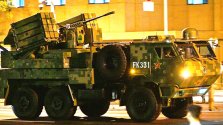
So if they become more IRGC-like, how would PLA deal with flying mopeds and all the other innovations seen in Ukraine? For organic SHORAD that's part of a combined arms brigade I don't think we have to worry, they are already on the case. Recall in last year's parade this vehicle the FK-3000 was demonstrated:

aed4af82f6dfb20a48c5af7c712fcc7c.jpg
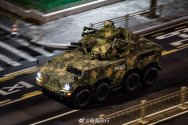
Instead of this one:

Gz1VDNCW0AAjh_1.jpg
Type 625.

Guancha guys talked about this afterwards and they said this is no coincidence. FK-3000 is starting to phase out Type 625 despite it being pretty new precisely because of what they are seeing in Ukraine. FK-3000 with its 35mm cannon can fire AHEAD rounds and being able to carry a huge number of small missiles vs four MANPAD missiles are all so that FK-3000 is better at dealing with small targets like FPV, Lancet, Switchblade etc. So PLA is certainly learning the lessons from Ukraine when it comes to SHORAD.

Question that I don't know the answer to is weather there's preparation done yet for defending fixed installations against small drone targets like Geran-2/Shahed 136/LUCAS/Chien Hsiang, and potentially large swarms of them at a time.

It could very well be that PLA has thought about this and done the work already, and some point in the future when we see a CCTV segments on some kind of installation we see in the carpark two LY-1 lasers parked and connected to EV fast chargers.
 

lcloo

Major
FK-3000 is ideal air defense cover for important mobile assets like HQ-9 launchers or mobile radars as well as airport or battalion HQ etc. where swarm drone attacks are to be expected.

Type 625 is good as air defense escort for small force on the move like a small convoy consist of 5 or 6 vehicles/truck/tanks or motorised patrol.

Swarm drone attacks normally would need prior planning that took days or long hours before launch, their targets are prioritized high value fixed assets normally exclude small mobile convoys.
 
Top