
You are using an out of date browser. It may not display this or other websites correctly.
You should upgrade or use an alternative browser.
You should upgrade or use an alternative browser.
China's Space Program Thread II
- Thread starter Blitzo
- Start date


Minor update on Tianwen-2 mission. According to an article authored by Andrew Jones and published in the US space industry website (increasingly defense-oriented) SpaceNews.com:
The probe is anticipated to enter a co-orbital state with the asteroid in early July this year.
Link:
Tianwen-2 May 28 last year, embarking on a voyage to the near-Earth asteroid 469219 Kamoʻoalewa (2016 HO3). The spacecraft is charged with both studying and sampling the asteroid and delivering material to Earth, before then heading to a main belt comet.
An update from Zhou Jishi of the China National Space Administration’s (CNSA) Lunar Exploration and Space Engineering Center at the UNCOPUOS Scientific and Technical Subcommittee in Vienna, Austria, states that Tianwen-2 is “currently operating in orbit with normal performance.” Tianwen-2 is currently in a heliocentric transfer trajectory.
The probe is anticipated to enter a co-orbital state with the asteroid in early July this year.
Link:
CMSA confirms the first Hong-Konger and Macau astronaut is expected to fly this year.BEIJING, Feb. 27 (Xinhua; Original from CMSA) -- In 2026, the China Manned Space Program will thoroughly implement the deployment of the 15th Five-Year Plan, deepening the advancement of its two major missions -- the application and development of the space station and the manned lunar exploration -- from a new starting point, striving to make greater contributions to accelerating the construction of a space powerhouse.
According to the China Manned Space Agency (CMSA), the China Space Station is currently operating stably in orbit with good efficiency; the development and construction for the lunar landing phase of the manned lunar exploration project are progressing smoothly, achieving multiple phased breakthroughs.
Since entering the stage of space station application and development, all parts of the program have worked in close coordination, successfully completing six crewed flights, four cargo resupply missions, and seven spacecraft return missions. They successfully implemented the first emergency launch mission, with six astronaut crews totaling 18 person-times conducting long-term stays in orbit. A total of 13 astronaut spacewalks and multiple payload deployments have been carried out, along with several extravehicular repair missions. The world record for the longest single spacewalk by astronauts was set. The selection of the fourth batch of reserve astronauts, including payload experts from Hong Kong and Macau, has been completed, and the selection process for low-cost cargo transportation systems has been finalized, with development work initiated.
In 2026, China plans to conduct two crewed missions and one cargo spacecraft resupply mission. Astronauts from the Hong Kong and Macau regions are expected to perform space station missions as early as this year, and one astronaut from the Shenzhou-23 crew will conduct a one-year in-orbit stay experiment.
Aiming for the goal of Chinese astronauts landing on the moon for the first time before 2030, the development and construction work for the lunar landing phase of the manned lunar exploration project is advancing steadily. So far, the development of major flight products, including the Long March-10 carrier rocket, the Mengzhou crew spacecraft, and the Lanyue lunar lander, is progressing smoothly. A series of large-scale tests have been successfully completed, including the zero-altitude escape test for the Mengzhou crew spacecraft, the landing and takeoff test for the Lanyue lander, the tethered ignition test for the Long March-10 rocket, and the low-altitude demonstration and verification of the Long March-10 rocket system, as well as the maximum dynamic pressure escape flight test for the Mengzhou spacecraft system.
In 2026, efforts will be fully dedicated to the construction of supporting facilities and equipment for the lunar landing mission at the Wenchang Spacecraft Launch Site, as well as the development of ground support systems including tracking, telemetry and command (TT&C), communications, and landing sites.
Since the project's initiation and implementation, it has consistently adhered to the principles of "peaceful utilization, equal and mutually beneficial cooperation, and common development," actively promoting international cooperation and exchanges in the field of manned spaceflight. In 2025, China and Pakistan signed a cooperation agreement on the selection and training of astronauts. The selection process is currently progressing smoothly. According to the flight mission plan and arrangements, a Pakistani astronaut will later perform a short-term flight mission as a payload expert, conducting scientific experiments from the Pakistani side aboard the China Space Station. Furthermore, the CMSA will continue to promote the implementation of cooperation projects with the United Nations Office for Outer Space Affairs (UNOOSA). China always welcomes fellow spacefarers from around the world to participate in and share the achievements of China's manned spaceflight development, working together to advance global space technology and making new and greater contributions to the peaceful use of outer space and the benefit of all humanity.
Notable lack of mention of Mengzhou-1 while focusing on infrastructure build-up at Wenchang for the lunar program, it's best not to draw any conclusion yet, since other parts are vague too, like the one about the pakistani astronaut (which is expected to fly on Shenzhou 24)
It's quite impressive how many tests CMSA did with just one static fire test article and one mengzhou prototype tbh.[The Mengzhou manned spacecraft's return capsule will remain in Hainan for sea-floating tests] Ma Xiaobing, chief designer of the Mengzhou manned spacecraft system for China's manned space program, revealed that the return capsule has previously conducted airdrop and zero-altitude escape flight tests, marking its third major flight test mission. This newly returned capsule will not be transported back to Beijing immediately. It will remain in Hainan, awaiting the next crucial test—the sea-floating test. The team needs to verify the spacecraft's floating stability and its ability to protect the cabin environment under different sea conditions, even with astronauts inside.
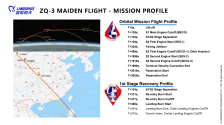
It seems the Initial Prototype of Qingzhou is still expected to launch on the Maiden flight of the Lijian-2 (there were some doubts); this initial prototype is not expected to dock to Tiangong but instead verify systems in free flight, Docking will come with the inaugural launch of the full version toward the end of the year.Guangzhou, February 24 (Southern Finance reporters Yang Qixin and Wang Dayu)
"After decades of development, my country's commercial aerospace industry has made significant progress and currently ranks second in the world," said Yang Yiqiang, Chairman of Zhongke Aerospace Technology Co., Ltd., in an interview with Southern Finance reporters on the afternoon of February 24 at the "Industrial Integration and Policy Innovation" sub-forum of the 2026 Guangdong Provincial High-Quality Development Conference.
In 2025, my country's commercial aerospace industry experienced explosive growth, completing 92 space launch missions throughout the year, of which 50 were commercial launches, accounting for over 50%, demonstrating strong momentum. Yang Yiqiang introduced that the number of space launches nationwide is expected to reach approximately 140 in 2026. From a long-term development perspective, the number of large liquid rocket launches per year should not be less than 100, and the annual satellite launch scale should reach at least 2,000 to meet the industry's development needs. Commercial aerospace is about to usher in large-scale development.
[...]
Yang Yiqiang revealed that in the past five years, the company's R&D investment has achieved a compound annual growth rate of over 100%, focusing on tackling "bottleneck" technologies. The LiJian-1 carrier rocket has successfully completed multiple launch missions, and its high reliability and cost-effectiveness have won market recognition.
He also revealed that Zhongke Aerospace has submitted its 2026 launch plan to relevant departments, planning to carry out 13 launch missions throughout the year, and striving to add 1-2 more. Among these, the LiJian-1 rocket will be scheduled for no fewer than 8 launches, including 2 sea launches; the LiJian-2 rocket is scheduled for its maiden flight in late March, carrying my country's initial prototype Qingzhou-1 spacecraft, and will subsequently undertake satellite internet networking and some national missions, with 4 related launches already scheduled for this year; in addition, the 100-kilometer recovery verification of the Lihong-2 spacecraft will also be steadily progressing. As a typical high-investment, long-cycle, and high-risk hard technology sector, commercial aerospace relies heavily on a relay-style, long-term technology and financial ecosystem for healthy and sustainable growth. Yang Yiqiang stated that with the support of policy funds and bank loans, Zhongke Aerospace successfully completed its Pre-IPO financing round and passed the guidance and acceptance inspection by the Guangdong Securities Regulatory Bureau in January of this year, actively preparing for its listing. Supported by policies such as science and technology subsidies, Zhongke Aerospace has been able to continuously invest in the development of its Lijian series rockets.
Last edited:


I would not be overly confident about that. I listened to the interview with Jared issacman today and he struck me as someone with an idea of what he wants to do. Artemis program could be delayed another year and still get to moon before CNSA.Artemis is doomed, CNSA might be the only organization in this century with a chance of successfully landing on the moon.
I don't think CNSA and CMSA care one way or the other if they make their lunar landing before the Artemis program's first landing (now Artemis-4); seems to me that if that eventuality comes to pass, they'd be glad to take a bow but they'd celebrate China's first lunar landing regardless. I think Chinese presenters have been talking about doing a landing "by" or "before" 2030 (年前) as far back as the 2010s. This entire "second Moon race" idea is something mostly ginned up by the media, US politicians, and by the US military-industrial-thinkg-tank complex to avoid the spectacle and embarrassment of potential headlines saying 'America has been overtaken' by an upstart. In so far as this political construction lights a fire under the Artemis program, it may be overall a useful thing for NASA; other than that, thiis narrative is rather silly: the US landed on the Moon in 1969, and when China in turn lands for the first time, they also will be able to ook upon this achievement with legitimate pride, In short, the current lunar efforts should allow everyone to "win".I would not be overly confident about that. I listened to the interview with Jared issacman today and he struck me as someone with an idea of what he wants to do. Artemis program could be delayed another year and still get to moon before CNSA.
That said, we all may be jaded about Moon landings due to the fairly large number of prior human and robotic landings (including those by India and Japan) but this endeavour is an exceedingly difficult engineering task even now, and crewed landing is still more difficult by an order of magnitude. Both US and China still must face challenges in order to make their crewed landings in the next few years.
For China, tthe 2029/2030 goal requires that the CZ-10A and Mengzhou make a good showing in its upcoming orbital flight, the 3-core CZ-10 make a near perfrect lunar flight with lunar-Mengzhou in 2027, near-perfect robotic Mengzhou-Lanyue landing demonstration, in-situ demonstration of lunar space sutis etc. They certainly have the potential to accomplish it, but everything needs to go right in order to keep to the schedule.
For the US, I think the challenges are even greater despite Issacman's February 27th press conference. Adding a LEO Artemis-3 docking mission in 2027 does not magically solve the launch cadence problem; the program was desinged to have one launch per year, and you can't simply command that it should now be 10 months when actual current cadence is 3.5 years per launch and counting without making major changes in staffing, structure, and/or funding. Then there's the issue of when will the prototype Starship HLS and prototype Blue Moon HLS make their first appearance? It's only about a year from a notional Feb/March 2027 launch to LEO for the Artemis-3 LEO docking mission (4/2026 Artemis-2 launch + ~10 months would give Feb or March 2027). Oh, and the newest version of Starship still has to dmonstrate orbital insertion. As for the Artemis-4 lunar landing mission, SpaceX and Blue Origin still need to first demonstrate successful orbital transfer of cryogenic fuels, not to mention successful robotic lunar landings by their respective HLS systems. There are still other issues, including e.g. the availability of SLS' new upper stages for these missions (this also assumes that the US economy remains largely problem-free in the interim). So color me skeptical that they'll pull off Artemis-4 (or even Artemis-5!) by the Trump-imposed deadline of 2028.
In my opinion, both US and China should just focus on their own programs rather than constantly looking over their geopolitical shoulders; after all, there's enough glory to go around for everyone as long as things are done carefully and safely. Unfortunately, on the US side most parties (NASA, USSF, Congress) are starting to look at the lunar South Pole landings via an exclusively geo-strategic lens (most likely a manifestation of group-think syndrome) so I fear we're condemned to hear an endless parade of "Moon Race" trash-talk for the next decade.
Issacman knows what he wants and might actually be sane, which set him apart from a lot of other Americans, but he's not the only one calling the shots, not from below and not from above. You can tell because someone who delayed and simplified A3 isn't dumb enough to actually believe A4 and A5 can both happen in 2028, those are for people above.I would not be overly confident about that. I listened to the interview with Jared issacman today and he struck me as someone with an idea of what he wants to do. Artemis program could be delayed another year and still get to moon before CNSA.
And at end of the day it's HLS that's the problem, not SLS or Orion, so it doesn't even matter what Issacman wants, he can only choose to be realistic about it.
The Artemis program has many problems but the HLS Landers are the bigger one,I would not be overly confident about that. I listened to the interview with Jared issacman today and he struck me as someone with an idea of what he wants to do. Artemis program could be delayed another year and still get to moon before CNSA.
Previously the americans's hope to return first was that the accelerated development of SpaceX's and/or Blue Origin's HLS could beat previous trends and accelerate to the point of being ready comfortably before the CMSA's Lunar architecture; by this point the SLS Block 1 and Orion, proven vehicles with existing hardware, could launch and execute on the landing before CMSA.
This changes two thing:
-The american lunar return now requires the development of a new upper stage and therefore a new version to the SLS; even if the upper stage is derived from the Commercial Centaur V by ULA, the adaptation of the upper stage, its ground infrastructure and its crew rating will likely take longer than the advertised 2 years, for reference, it took NASA, Boeing and ULA 5 years (, p8) between ordering and delivery of the current ICPS upper stage, which is adapted from ULA's Delta IV launcher, we are talking about the same organisations (ULA and Boeing Space), that have generally not gotten more efficient over the past decade. The new upper stage adds significant uncertainty to the SLS's readiness where there wasn't before.
-This favours SpaceX's lander by adding the intermediary milestone (that is now Artemis III in H2 2027) where both HLS provider have to demonstrate docking with Orion and a crew-rated habitable module; while pushing the requirement of uncrewed lunar landing demonstration beyond; SpaceX has more experience with docking through Dragon, while Blue Origin will soon have more experience in lunar landing with the Blue Moon MK1 lander (and their new accelerated HLS is a derivative of it that doesn't require orbital refueling). The first provider that can be ready for Artemis III and do joint training with Orion will undoubtedly be selected for Artemis IV, The new intermediary requirement of Artemis 3 stacks the odds in favour of SpaceX and effectively remove one of the two possibility of the accelerated HLS development beating the odds.
On the positive side for NASA this will slightly derisk the lunar landing by demonstrating Orion-HLS docking.
Last edited: