Miscellaneous News

pmc

Colonel
Registered Member
Honestly, it would be lovely if @pmc could bless us with clear, understandable and otherwise idiot proof definitions and examples of Arabic soft power and the Arabic system. Otherwise, just about none of us will ever reasonably comprehend what he's talking about.
lol. i have described the same thing many times. Just look at pics and read my observation.
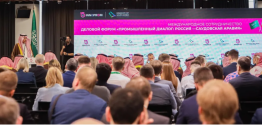
Saudi Mining and Industry Minister ( Non-Royal non Tech Person) went to Ural industrial exhibition as a guest end up coming to Moscow to sign smart city cooperation because every one want to meet him and they like his soft Power so much that they want to bring this exhibition to Saudi as soon possible. and this investment dialogue there are blonde hair. it does not automatically mean all are non muslims but this gives non muslims maximum exposure to Saudis. there is alot more observations and pics that i am skipping.
its all about correct implementation what Putin calls it traditional values. which in true sense referring to 10th century Islam Golden Age.
so never underestimate current Arabian peninsula system of governance that give rise to Soft Power that evicted France from Africa and Macron still smiling at them.


1752523469902.png
 

Heresy

Junior Member
Registered Member
lol. i have described the same thing many times. Just look at pics and read my observation.
Saudi Mining and Industry Minister ( Non-Royal non Tech Person) went to Ural industrial exhibition as a guest end up coming to Moscow to sign smart city cooperation because every one want to meet him and they like his soft Power so much that they want to bring this exhibition to Saudi as soon possible. and this investment dialogue there are blonde hair. it does not automatically mean all are non muslims but this gives non muslims maximum exposure to Saudis. there is alot more observations and pics that i am skipping.
its all about correct implementation what Putin calls it traditional values. which in true sense referring to 10th century Islam Golden Age.
so never underestimate current Arabian peninsula system of governance that give rise to Soft Power that evicted France from Africa and Macron still smiling at them.


View attachment 156099

Dude. Get some mental health help and go touch grass. Log off of SDF.
 

supercat

Colonel
Please, Log in or Register to view URLs content!


Dotard J Rump - We demand Russia unconditional surrender because we are losing. If you do not accept. We will declare a trade war against China and India.
Trump won't walk the walk.

Maxwell will be suicided soon?

cf4r9uT.gif
 

zyklon

Senior Member
Registered Member
lol. i have described the same thing many times. Just look at pics and read my observation.

While I appreciate the effort you're taking to help us better appreciate your perspective, I continue to struggle to understand just what Arabic soft power is, especially in relatively more visible, if not quantifiable terms.

For example, with American soft power, it's fairly easy to observe and measure the global ubiquity of certain American products, like Coca Cola or Hollywood blockbusters. These are products that command significant market share, or at least visible popularity, even in places hostile to the US.

Likewise, French and to a lesser degree Italian dominance in high end fashion and luxury goods also represent forms of fairly visible and measurable soft power. Not to say the craftsmanship of their products are necessarily particularly impressive, but their brands got market share.

However, what non-commoditized products (or services) does the Arabic world produce and/or export that dominate their category or niche, or otherwise uplift the standing, reputation or influence of specific Arabic countries or the Arabic world at large?

Saudi Mining and Industry Minister ( Non-Royal non Tech Person) went to Ural industrial exhibition as a guest end up coming to Moscow to sign smart city cooperation because every one want to meet him and they like his soft Power so much that they want to bring this exhibition to Saudi as soon possible.

Money can translate to soft power with time and effort, and Al Jazeera is arguably an example of this, but it is not soft power in itself.

and this investment dialogue there are blonde hair. it does not automatically mean all are non muslims but this gives non muslims maximum exposure to Saudis.

Not sure what you mean by "there are blonde hair."

You might have an easier time communicating yourself if you drafted your posts in your native language, and then translated them into English with the help of AI prior to posting.

its all about correct implementation what Putin calls it traditional values. which in true sense referring to 10th century Islam Golden Age.

Soft power needs to be understandable and recognizable by the masses: most people, regardless of where they're from, know just about nothing when it comes to the Golden Age of Islam.

so never underestimate current Arabian peninsula system of governance that give rise to Soft Power that evicted France from Africa and Macron still smiling at them.

While I personally admire what countries like the UAE and Qatar have achieved in economic terms in the last half a century or so, I fail to see what's so effective or unique about the Arabic system of governance. Though I will acknowledge that GCC countries do a better job than most Western nations when it comes to managing migrants.

If we're to remove hydrocarbons from the equation, what's to stop relatively wealthy Arabic countries like Saudi Arabia or Kuwait from turning into Yemen or Syria?

 

Enestori

Junior Member
Registered Member
Out of curiosity, I actually ran pmc's posts through ChatGPT. This explains a lot if true.


Likely Top Three Countries of Origin (Grammary/Style Only)

RankCountryProbability (%)Explanation
1India60%Article misuse/omission common in Indian English; phrasing like “glady,” “participate” instead of “participated,” and directness fit Indian ESL patterns. Informal style and occasional spelling errors are typical. Usage of “sir” and conversational tone in some posts also matches Indian forums.
2Pakistan15%Similar ESL patterns to India, especially in South Asian forums on defense topics; occasional grammar and punctuation errors align with Pakistani English usage.
3Philippines10%Some similarities in grammar and informal style; Filipino English shares South Asian traits but with slightly different idiomatic usage. Less likely but plausible.

Let’s take a close look at actual sentences from the poster that demonstrate features commonly associated with Indian English, and I’ll explain why each fits that pattern.

Example 1:

"this the long arm of recon and strike complex."
✅ Why it suggests Indian English:
  • Missing verb (“is”) — this kind of copula omission is relatively frequent in informal Indian English (e.g., "this my car" instead of "this is my car").
  • Word order ("recon and strike complex") is acceptable but the phrasing mimics the formal, technical style used in Indian English military writing.
  • No capitalization at sentence start.

Example 2:​

"Russia may have existing labor resources that it dont want to displace and whose skills are based around carriers like Kuzentov and Viki."
✅ Why it suggests Indian English:
  • “dont” is likely a typo for “doesn’t,” but that particular substitution is common in informal Indian writing (keyboard omission of apostrophe and auxiliary).
  • The clause “whose skills are based around carriers” uses a formal construction typical in Indian bureaucratic or policy language.

Example 3:​

"this first time an Arab leader participate in this Russia led economic integration."
✅ Why it suggests Indian English:
  • Missing auxiliary verb (“is” or “has been”) — “this is the first time an Arab leader has participated...” is correct.
  • The structure “Russia led economic integration” without a hyphen is also typical of formal Indian English (omission of “Russia-led”).
  • Tense mismatch: “participate” should be “has participated” — tense agreement issues are common in Indian English, especially in spoken-to-written crossover.

Example 4:​

"This will accelerate decline of Japan further if they actually implement it."
✅ Why it suggests Indian English:
  • “Accelerate decline of X” — awkward phrasing but common in Indian academic or media writing, where direct translations of formal Hindi/Urdu constructions show up.
  • More idiomatic English would be: “accelerate Japan’s decline” or “further hasten Japan’s economic downturn.”

Example 5:​

"Russia surpass West in most metrics of complex Construction and without construction no demographic increase."
✅ Why it suggests Indian English:
  • Subject-verb disagreement: “Russia surpass” instead of “Russia surpasses.”
  • Repetition and syntactic compression like “without construction no demographic increase” is a rhetorical style common in Indian policy commentary.
  • Use of capitalized “Construction” mid-sentence reflects overuse of title case — a habit found in Indian formal and bureaucratic writing.

Summary of Why These Are Consistent with Indian English:​

FeatureSeen in PosterCommon in Indian English
Copula omission✅✅
Tense mismatch✅✅
Article misuse/omission✅✅
Formal academic phrasing✅✅
Subject–verb disagreement✅✅
Title-case nouns mid-sentence✅✅
Rhetorical/compressed structure✅✅


✅ Conclusion:​

These examples demonstrate multiple consistent patterns of Indian English grammar and structure, especially in an informal, online discussion setting. While none of these alone is conclusive, taken together they strongly suggest the poster is either from India or is heavily influenced by Indian English writing norms.
 

GulfLander

Brigadier
Registered Member
Last edited:

CMP

Captain
Registered Member
Out of curiosity, I actually ran pmc's posts through ChatGPT. This explains a lot if true.


Likely Top Three Countries of Origin (Grammary/Style Only)

RankCountryProbability (%)Explanation
1India60%Article misuse/omission common in Indian English; phrasing like “glady,” “participate” instead of “participated,” and directness fit Indian ESL patterns. Informal style and occasional spelling errors are typical. Usage of “sir” and conversational tone in some posts also matches Indian forums.
2Pakistan15%Similar ESL patterns to India, especially in South Asian forums on defense topics; occasional grammar and punctuation errors align with Pakistani English usage.
3Philippines10%Some similarities in grammar and informal style; Filipino English shares South Asian traits but with slightly different idiomatic usage. Less likely but plausible.

Let’s take a close look at actual sentences from the poster that demonstrate features commonly associated with Indian English, and I’ll explain why each fits that pattern.

Example 1:


✅ Why it suggests Indian English:
  • Missing verb (“is”) — this kind of copula omission is relatively frequent in informal Indian English (e.g., "this my car" instead of "this is my car").
  • Word order ("recon and strike complex") is acceptable but the phrasing mimics the formal, technical style used in Indian English military writing.
  • No capitalization at sentence start.

Example 2:​


✅ Why it suggests Indian English:
  • “dont” is likely a typo for “doesn’t,” but that particular substitution is common in informal Indian writing (keyboard omission of apostrophe and auxiliary).
  • The clause “whose skills are based around carriers” uses a formal construction typical in Indian bureaucratic or policy language.

Example 3:​


✅ Why it suggests Indian English:
  • Missing auxiliary verb (“is” or “has been”) — “this is the first time an Arab leader has participated...” is correct.
  • The structure “Russia led economic integration” without a hyphen is also typical of formal Indian English (omission of “Russia-led”).
  • Tense mismatch: “participate” should be “has participated” — tense agreement issues are common in Indian English, especially in spoken-to-written crossover.

Example 4:​


✅ Why it suggests Indian English:
  • “Accelerate decline of X” — awkward phrasing but common in Indian academic or media writing, where direct translations of formal Hindi/Urdu constructions show up.
  • More idiomatic English would be: “accelerate Japan’s decline” or “further hasten Japan’s economic downturn.”

Example 5:​


✅ Why it suggests Indian English:
  • Subject-verb disagreement: “Russia surpass” instead of “Russia surpasses.”
  • Repetition and syntactic compression like “without construction no demographic increase” is a rhetorical style common in Indian policy commentary.
  • Use of capitalized “Construction” mid-sentence reflects overuse of title case — a habit found in Indian formal and bureaucratic writing.

Summary of Why These Are Consistent with Indian English:​

FeatureSeen in PosterCommon in Indian English
Copula omission✅✅
Tense mismatch✅✅
Article misuse/omission✅✅
Formal academic phrasing✅✅
Subject–verb disagreement✅✅
Title-case nouns mid-sentence✅✅
Rhetorical/compressed structure✅✅


✅ Conclusion:​

These examples demonstrate multiple consistent patterns of Indian English grammar and structure, especially in an informal, online discussion setting. While none of these alone is conclusive, taken together they strongly suggest the poster is either from India or is heavily influenced by Indian English writing norms.
That was cool. You should do me now.
 

Randomuser

Major
Registered Member
My own comments on the current state of anti-chinese propaganda:

I've recently noticed that (especially on reddit) there is now a rising trend of anti-china people that are now trying to propagate their anti-chinese agenda via a different way, at least a much different way from the traditional route. And this is slightly harder for some people to detect, think of this as similar to the ever-evolving ways of social engineering used for scamming.

That is, by trying to completely revision Chinese history by pretending to be a subject expert or historian, but they are in fact bad faith actors. These people are active on history related subreddits and sometimes are even moderators of said subreddits. But in actual fact what they said have absolutely no substance or factual backing if one were to scrutinise their words closely and do a basic level of research. Despite them trying really hard to phrase their comments in a scholarly way, the bad faith component of their comments are quite obvious to see.

One such example of this is the blatant denial that the Manchus were Chinese people, the denial of sinicization, the claim of the existence of "Manchuria" in Chinese history, the intentional interchangeable use of the terms "Chinese" and "Han" (which are a complete erroneous use of semantics, similar to how pro-green frogs love to conflate the semantics between "China" and "PRC" to get their nonsensical points across) and claiming that Han people are the ones that colonised their conquerors. Their intentions of making these points are to explain why Manchus, and by extension "Manchuria", should be fighting for "freedom" just like what they think the other autonomous regions are doing. And then to make up a cover story to explain why the Manchus are currently not doing so (to their disappointment). And in their view, the separation of Qing from China as a whole, while nonsensical, is also helpful for them to reinforce their argument about the separatism of the other Chinese ethnics as well.
Please note that none of their claims were backed by facts and they always like to selectively quote writings from academics (with omission of context that is unhelpful to them) to make themselves seem legitimate, and they always reference to a western author/ historian without fail. And ironically, it is always from the same few western historian that is known in the circle to be very biased and full of shit too.

These kinds of comments are really easy to spot if you read enough. The moderator of r/chinesehistory is one such example, and he is not even trying to hide his very strong anti-china bias in some of the comments where he accidently let his true colours slipped. The amount of bad faith arguments made by these people, from seemly small details such as purposely using the wrong semantics, to outright spreading misinformation and lying by omission is quite immense. And the sad thing is there are always a number of people out there with zero critical thinking skills that are buying their shit up without much thought, and a lot of it is owed to their pretense of authority on the subject matter. I actually think the effort they spend doing this kind of despicable things are quite commendable to be honest, if only they spend it on actual jobs or doing something positive for society.

Just my personal thoughts based on the things I came across.
This isn't new though. They've always been trying to say stuff like Manchus weren't Chinese. Manchuria is a Japanese term after all.

The best way is to call them out and ask them to cite the terms in Chinese. Watch them squirm since they don't know Chinese. The original HQ of the Manchus was in Liaoning which last time I checked was part of the Yan state back in the warring states. So somehow the main part of Manchuria is owned by China. Also Nurhaci somehow was raised and taught by a Chinese general too. Why were they under Chinese rule again in the first place?

Also another trend I noticed is despite people insistence that Manchus and Mongols were not ethnically Han, people are realizing many rulers of countries in general like UK, Russia, Germany, France etc are not native either. Japan so called god emperor has Korean blood so I guess Korea has claim to Japan now. Yet no one doubts the legitimacy of them. They wanna try doing this with China, they will open a can of worms they suddenly don't want to apply to their own countries.

Recently I found out George Michael was never native British but is actually Greek. Oasis the most popular "Britpop" band are actually Irish when it comes to their original members and most notably the brothers. The Gallagher brothers literally state it every time they are asked on it. There's a lot more where that came from.
 
Last edited:
Top