Possible New CTL181-Series Rocket Line-Charge Vehicle Observed with the 73rd Group Army
Images circulated on X by Iron Lady, @nuwangzi, and Jesus Roman, @jesusfroman, appear to show a new high-mobility MICLIC breaching system mounted on a Dongfeng Mengshi CTL181-series 6x6 light tactical vehicle.
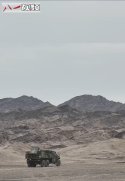
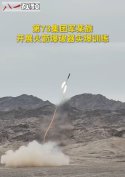

The three images capture the complete firing sequence. The first shows the vehicle with its upper equipment door open and the launcher rail elevated. The second shows the rocket being fired and deploying the explosive line charge. The third shows the resulting detonation across the target area. The Bayi Video logo in the upper-left corner identifies the footage as originating from an official Chinese People's Liberation Army multimedia source. The accompanying report states that the training involved a brigade assigned to the PLA 73rd Group Army. (
)
Carrier Platform
The carrier appears to be a Dongfeng Mengshi CTL181 or CTL181A 6x6 protected tactical vehicle fitted with a specialized rear-mounted engineer payload. The CTL181A has already been adapted to support several PLAGF mission systems, including the PCL-171 self-propelled howitzer, a bridging system, and a mortar carrier. This makes the chassis a logical choice for a modular combat engineer vehicle within the Engineers units of the Light Combined Arms Brigades (CAB). Compared with older and heavier tracked mine-clearing vehicles, such as the Type 82 and GSL-133, the CTL181-series platform offers significantly greater road mobility and logistical commonality with other wheeled systems within the Light CAB. Its protected single-row cab and rear cargo platform allow it to carry specialized equipment while maintaining the speed needed to accompany motorized and light combined-arms formations. The greatest improvement may therefore be mobility rather than a completely new method of mine clearance. A wheeled system of this type could move rapidly between threatened sectors, travel at highway speeds with forward maneuver elements, and deploy without requiring the transportation support normally associated with heavier tracked engineering vehicles.
GPB128 Rocket Blasting System
The rear-mounted equipment has been identified by open-source observers as the GPB128 rocket blasting system. However, this designation should be considered provisional. The official Bayi Video report describes the equipment only as a "rocket blasting system" and does not provide a formal model number. The GPB128 appears to function as a vehicle-mounted, rocket-propelled Mine-Clearing Line Charge, or MICLIC. When fired, the rocket pulls a flexible explosive line from the launcher and lays it across a suspected minefield or obstacle belt. Once the charge is positioned, it is detonated remotely. This is similar to the GPB127 found on the GSL132, GSL130 and GSL135 Assault Breacher vehicles. The launcher arrangement shown in the first image is also noteworthy. The elevated rail and opening top door suggest that the complete rocket and line-charge assembly is carried within a protected or enclosed module during movement. This would protect the system from weather, dust, and routine damage while allowing the crew to transition quickly from movement to firing. An
assumption is that the GPB128 is packaged modules like the GPB127 of the GSL-130-series tracked vehicles.
Tactical Employment
A CTL181-mounted line-charge system would provide PLAGF Light CAB engineer units with a rapidly deployable breaching capability for supporting wheeled and motorized assault forces. Rather than waiting for a tracked breacher to catch up with the maneuver formation, a CTL181-based system could remain closer to the lead elements and respond quickly when they encounter a minefield or prepared obstacle.
The vehicle could be especially useful during:
- Rapid offensive operations by wheeled combined-arms units
- Route clearance and mobility support
- Breaching operations in open or desert terrain
- Clearance of minefields covering roads, passes, and chokepoints
- Reduction of explosive obstacles before an armored or infantry assault
The vehicle's lighter configuration may involve tradeoffs in armor protection and cross-country mobility compared with tracked systems such as the GSL-135. It would therefore be better understood as a complementary capability rather than a direct replacement for heavier armored breaching vehicles. It is also important to note that detonation of a line charge does not automatically produce a completely safe lane. Follow-on engineers would normally need to proof, mark, and possibly widen the cleared route. Some mines, deeply buried devices, command-detonated explosives, and mines fitted with specialized fuzes may survive the initial blast.
Assessment
The appearance of this system represents a potentially important development in PLAGF combat engineering. Mounting a rocket-propelled line charge on the CTL181-series chassis gives Chinese Light CAB engineer units a combination of standoff breaching capability and high operational mobility. The system appears designed to help engineers maintain the tempo of fast-moving wheeled formations, particularly where minefields or explosive obstacles threaten to delay an advance. While its formal designation and technical specifications remain unconfirmed, the footage indicates that the PLA is continuing to expand the CTL181 family into specialized engineer and combat-support roles.
Image attribution: , and
Primary source: China Military Online - Bayi Video, 中国军网八一视频
Title: 第73集团军某旅开展火箭爆破器实爆训练
English translation: "A Certain Brigade of the 73rd Group Army Conducts Live-Fire Rocket Blasting System Training Exercise"
Reporter: Zhang Ruiping, 张瑞平
Editors: Yang Shuai, 杨帅, and Zhang Aohan, 张傲菡
Release date: July 21, 2026
Original video: