
You are using an out of date browser. It may not display this or other websites correctly.
You should upgrade or use an alternative browser.
You should upgrade or use an alternative browser.
Chinese air to air missiles
- Thread starter tphuang
- Start date



Nevertheless, if you’ve seen enough of the junk spewed out by AI, you’ll spot it right away.I don't think one needs AI to create a generic looking slide populated with a summary of some of the cumulative rumours we've had for PL-16.
There are reasons to question and be wary of its credibility but the format of the slide isn't really one of them imo.

plawolf
Lieutenant General
How does variable thrust solid rocket booster work? What’s the mechanism for controlling how fast solid fuel burns?
I think to understand that you must first ask, what is the purpose of the variable thrust requirement? Depending on what you are trying to achieve, some options either present themselves or remove themselves.
The most obvious reason for a BVR missile to want vary thrust is to increase total time under controlled thrust to boost range and terminal energy state. Being able to reduce thrust when turning can also help with agility, but would come with significantly higher technical challenges and costs, so not sure that juice would be worth the squeeze, especially for a BVRAAM.
So, with the above assumption in place, the most obvious and technically feasible solution would be to simply build upon and expand the dual pulse principle of the PL15 and add in more burn stages. Going from dual pulse to triple or even quadruple pulse would be relatively straightforwards, but just how many stages you can do will ultimately come down to how light and compact you can make your stop/start stage boundaries and how rapidly and reliably you can trigger subsequent stages after the previous one burns out.
At one end of the spectrum, you can have say 4-6 one second burn pulses in your first stage section to be used during cruise phase where each pulse will burn out, and the missile will cruise on inertia for a predetermined time before triggering the next pulse and vastly increase cruise range. Then the final stage kicks in as one continuous burn for terminal engagement.
Ideally you will want to be able to jettison the first stage both to boost terminal performance to minimise the dead weight and aerodynamic drag you are hauling, but also to allow you to engage targets at much close ranges without massively nerfing your missile’s performance by limiting its burn characteristics to those of the first stage on-and-off burn mode.
At the other end of the spectrum, if you can make the pulse separation mechanism light and compact enough to give you the ability to pack in enough such pulses to control burn time to 0.25-0.5 seconds (which isn’t actually that many pulses, since the AIM120C5 has a totally burn time of between 7-9s, so if we just use a nice round 10s total burn time estimate for the PL16, with 4-6s for the first stage, that leaves 4-6s for the second stage, so that’s 8-24 pulses, which while a lot, isn’t stupidly high either). The key make or break tech would be how fast re-ignition could happen and how reliable they can make it, since the number of pulses will multiply the failure rate, so they need the new re-ignition mechanism to have a reliability of 4-12 times of that used on the PL15 to have the same failure rate on re-ignition for example.
Personally, I think in terms of tech feasibility, having a 6s first stage broken into 4-6 pulses of 1-1.5s duration each and a 4s second stage full burn for terminal engagement seems the most likely approach. With the micro-pulse terminal stage design more likely as a later block version or a totally new missile design.
Talking purely theoretically about a strictly single pulse VARIABLE thrust from a solid rocket motor - such ideas have been researched. Variable thrust doesn't have to rely on multiple pulses. From the one (Chinese) paper on it I read, they're researching a pin to be placed behind the rocket motor nozzle. The pin moves and creates larger or smaller nozzle area - which then impacts the burn rate (This part I am not truly understanding - how does burn rate decrease but whatever) And then because the temperature to which the pin is subjected to is huge - there's also a generated low temperature gas stream generated (so an additional complex system on a rocket motor) which then mixes with all that and prevents the super heated rocket exhaust to melt away the pin. Something like that.

How does variable thrust solid rocket booster work? What’s the mechanism for controlling how fast solid fuel burns?
There are multiple approaches on this technology:
Gen 1. Propellant thermal control
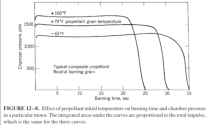
Basically the hotter propellant gets, the higher chamber pressure it can be achieved, which in a result hinders burning time and thus flight envelope.
Gen 2. Gel propellants
Physically, gel propellants are the fluids whose rheological properties are altered by gelling agents so that they behave as solids at rest and can be atomized and combusted like conventional liquid propellants. The current definition of the gel propellants emphasizes their ability to flow under shear and gel propellants are almost exclusively intended to function like liquid propellants.
It has its limitations though, basically it is an inferior type of liquid propellant rockets with worse specific impulse
Gen 3. Nozzle based Rocket motor
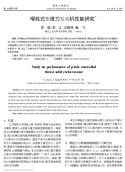
In short you insert a rod to rocket engine nozzle chock point and change the position to achieve different mass flow (hence the thrust output).
Gen 4. Throttling segregated fuel⁃oxidizer systems
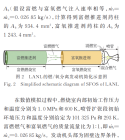
This approach separate motor into oxidizer-rich burner and fuel-rich burner, with a one-way valve in between. Then it should be rather easy to control the valve to achieve desired thrust.
Last edited:
But those solutions are really meant for orbital launch sized rockets, and reusable ones at that. Even if it’s technically possible to miniaturise it to work on a AAM, the costs would be incredibly high in terms of weight/performance and monetary value.
E.Fleeman summarized.
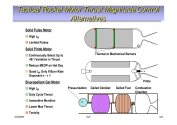
Gel motor was actually tested in US as TOW replacement program, tho it was complex and require pressurization and toxic as the fuel or oxidizer part might contain same stuff e.g Hydrazine or Boron in it.
Overall tho multi pulse rocket seems simpler to implement. But.. it come in cost
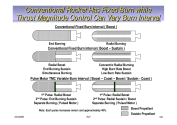
Each pulses you put in the motor, increases the cost by 40%.. so a dual pulse motor will cost 40% or 1.4times of single pulse one. 3 Pulses like one in David's sling would make the motor 80% or 1.8 times more expensive.
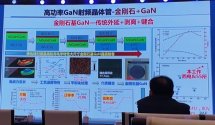
Tell me, why can’t AI generate images by emulating a real photo?View attachment 176015
This one does not look like made by AI. If this one is real, then the A2A missile one may as well be real.
"verify open-AI ..." could be BS.


Causes indeed much confusionTell me, why can’t AI generate images by emulating a real photo?
