During a demonstration flight at the Dubai Airshow 2025, the Russian Su-57E fighter jet displayed its internal weapons bays. The fighter opened its main weapons bay, housing two Kh-58UShK anti-radar missiles. The aircraft also carries RVV-MD2 short-range air-to-air missiles, an export version of the R-73M RMD-2 missiles. The RVV-MD2 missile has a forward range of up to 40 km. As it approaches its target, the missile can change its angle of attack, including attacking the rear hemisphere. Simply put, the missile can turn and hit a target located behind the Su-57 fighter. Deflecting an attack from such a missile is nearly impossible due to its proximity to the launch site. The RVV-MD2 missile is guided by a multispectral warhead, using infrared and ultraviolet wavelengths, ensuring resistance to modern heat traps. During flight, the missile can be redirected to another target. The RVV-MD2 missile weighs approximately 115 kg, has a warhead of approximately 8 kg, is approximately 2.9 meters long, and has a flight speed of up to 4,568 km/h.

You are using an out of date browser. It may not display this or other websites correctly.
You should upgrade or use an alternative browser.
You should upgrade or use an alternative browser.
Russian Military News, Reports, Data, etc.
- Thread starter tphuang
- Start date
Joint naval exercises between Russia and the Republic of Myanmar, dubbed "Marumex 2025," concluded in the Andaman Sea. The Russian Ministry of Defense released footage from the event. The main objective of the exercise was to develop and strengthen naval cooperation, as well as to practice ensuring the safety of civilian shipping and maritime economic activity. During the exercise, Russia deployed the frigate Marshal Shaposhnikov, the corvette Gremyashchy, and the tanker Boris Butoma. Myanmar's participating ships included the landing and helicopter dock ship Muttammah, the frigate Kyansittha, the corvette Tabinshwethi, and the submarine Mynye Thein Kha Tu. The Russian and Myanmar ships practiced joint maneuvering and following submarines. Combat exercises involving artillery fire and anti-submarine weapons were also conducted. During the exercise, anti-terrorist groups practiced freeing a vessel that had been captured by "pirates."


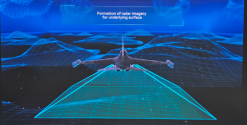
The Russian Ministry of Defense has received a batch of new Su-30SM2 multirole fighters. Thanks to the powerful Irbis-E radar, the Su-30SM2 can detect targets at a range of up to 400 km, as shown on the screen. When operating against low-observable targets with an RCS of approximately 0.1 m², the detection range is approximately 90-120 km, placing the radar on par with the best Western 4++ generation models.

Horrendous shade of turd brown, but it is what it is. At least we get some variety over the usual Russian blue/teal
A full-scale mockup of the Russian-made 177S aircraft engine, featuring improved performance compared to previous-generation powerplants, was unveiled for the first time at the Dubai Airshow 2025 in the Middle East. The fifth-generation 177S turbofan engine is designed for operational and tactical aircraft. The 177S engine generates up to 14.5 tons of thrust and has a service life three times longer than the previous generation, reaching 6,000 hours. Fuel consumption has been reduced by 7%. The engine outperforms its foreign counterparts in a number of key characteristics. Its dimensions and weight match those of the serial AL-31F/FP engines, making it suitable for installation on Sukhoi Design Bureau aircraft, including the Su-27, Su-30, Su-33, and Su-34.
some more observation from Dubai air show. Russia has presented Ka-52M and Arablet-AM LPI radar.
Ka-52M is used as low altitude platform. they are giving it further advancements in radar and long range cruise missiles that means they are finding targets that fighters cannot deal with it both land and air (how big is Ka-52M fleet from engine production?). This Ka-52M is part of dynamic air defense.
Ka-52M alone is not enough. The Pantsir SMD claimed to have detected and destroyed complex aerial targets ( plural) and thats before the upgraded Pantsir. why it so important because it is used in cities with taller buildings. and other SAMs cannot detect or react.
The system need to be light weight and fast accelerating missiles. ( advancement in material technologies).
If there is Stealth++fighter than Stealth+++ drones and missiles.

Ka-52M is used as low altitude platform. they are giving it further advancements in radar and long range cruise missiles that means they are finding targets that fighters cannot deal with it both land and air (how big is Ka-52M fleet from engine production?). This Ka-52M is part of dynamic air defense.
Rostec unveiled the Arbalet-AM airborne radar system for the first time in Dubai.
The Radio-Electronic Technologies Concern held the international premiere of its latest airborne radar system, the Arbalet-AM, for helicopters and fixed-wing aircraft at the Dubai Airshow 2025. Equipped with an active phased array (AESA) radar, the system boasts enhanced stealth capabilities and utilizes artificial intelligence technologies. The system also enables drone control.
The Arbalet-AM is capable of effectively performing missions in challenging jamming environments thanks to its high level of stealth. While maintaining its target detection range, this is crucial in today's environment.
Compared to similar solutions, the concern's development includes the ability to exchange data with unmanned aerial vehicles and control them using a narrow-beam AESA. This increases the drone control system's immunity to interference.
The use of artificial intelligence elements significantly improves the accuracy of air, land, and sea target recognition. The system also helps reduce the time it takes for the crew to make decisions in flight.
"KRET, within the Rostec State Corporation, is responsible for the development and production of advanced aviation equipment. Our new system outperforms existing airborne radar systems and meets all modern requirements. The use of an AESA with unique LPI (low probability of intercept) technology ensures virtually complete operational stealth and previously unattainable jamming immunity for the airborne radar, which ultimately significantly increases the survivability and effectiveness of combat aircraft and helicopters," noted KRET CEO Alexander Pan.
Ka-52M alone is not enough. The Pantsir SMD claimed to have detected and destroyed complex aerial targets ( plural) and thats before the upgraded Pantsir. why it so important because it is used in cities with taller buildings. and other SAMs cannot detect or react.
The system need to be light weight and fast accelerating missiles. ( advancement in material technologies).
If there is Stealth++fighter than Stealth+++ drones and missiles.
19.09.2025
The Russian army receives a batch of upgraded Pantsir systems.
The Pantsir-SMD systems have proven their high effectiveness in protecting Russian airspace, and have been able to detect and destroy complex aerial targets during their participation in combat operations.
some more Dubai show. Bogdan mentioned difference between Western and Russian display routine. This is the export version.
This Yak-130M has not only targeting pod, AESA radar but full self protection suite of a fighter. this show things are becoming light weight for wingtip carriage or the wings are stronger. suitable for low altitude drone hunting when it flies at economical cruise.

Russia knights.
Sergei Bogdan: The Su-57E's weapons bays amaze experts with their size
— Sergey Leonidovich, have any new aerobatics elements been added to the third foreign demonstration of the Su-57 fighter jet?
One difference between us and foreigners at airshows is that we try not to fly at high speeds. All aircraft, whether the Rafale or the F-35, accelerate to very high speeds at airshows, sometimes approaching transonic speeds. This requires the aircraft to fly far away from the spectators and spend a considerable amount of time. The F-35's display lasts twice as long as ours. The Su-57E, on the other hand, offers a fairly comprehensive aerobatics display, which is quite sufficient for both spectators and specialists. They have time to see the aircraft's full capabilities and don't tire of the monotony of similar maneuvers.
During one flight, you opened not the usual three cargo compartments—two on the wings and one on the fuselage—but only two, one of which was in the wing. Why?
"Two hatches were open. One held air-to-surface missiles, the other air-to-air missiles. We were demonstrating that even the prospect of asymmetric missile launches doesn't affect the aircraft's performance. We test aircraft with various weapon configurations, including those with a significant degree of asymmetry. This is also important for specialists to see."
ow does the car handle in the local skies and climate? This is the East—heat, sand. How do the engines work?
"The Su-57E is designed for significantly harsher operating conditions. There's no room for imagination here; we know our engines operate in dust storms, but we haven't encountered anything like that in the UAE specifically. As for temperature, the heat in Dubai isn't that severe right now, no higher than 33°C. We test our aircraft at full load and in more extreme conditions. The current climate conditions here are designed."
— Is the same car being shown at this exhibition that was at the last two foreign exhibitions?
"No, it's different. It has different avionics and a more advanced cockpit. This aircraft is already equivalent to the export version of the Su-57E."
This is the third time the Su-57 has been showcased at international exhibitions. Do you feel the attention continues to grow?
"I don't want to make anything up here. It depends on many factors. For example, in China, the aircraft sparked a surge of interest—it was the world premiere of our fifth-generation aircraft. And their developed media and social networks, which captured the attention of the entire Chinese nation, are crucial. And if I meet a Chinese person here in Dubai, they'll likely recognize me and, with genuine, almost childlike delight, approach me to ask for an autograph or a photo. The same thing happens to me in Moscow when I meet Chinese people. During the exhibition in Bangalore, India, there was less of this at first, but later it was also impossible to walk peacefully anywhere."
How do our military pilots rate this aircraft in comparison to previous generations of aircraft?
"I know the aircraft is currently in active use, and Russian Air Force pilots speak very highly of it. We, as test pilots, have a slightly different mission: we look for flaws in the technology, not its strengths. We write massive deficiencies reports for any aircraft, absolutely any aircraft. Hundreds of these flaws, both minor and major, are being addressed promptly."
This Yak-130M has not only targeting pod, AESA radar but full self protection suite of a fighter. this show things are becoming light weight for wingtip carriage or the wings are stronger. suitable for low altitude drone hunting when it flies at economical cruise.
Russia knights.
At the conclusion of the Dubai Airshow 2025 international aerospace exhibition, Rostec unveiled close-up footage of the Il-76MD-90A military transport aircraft. The Russian-made Il-76MD-90A heavy transport aircraft is a major upgrade of the Il-76MD. The aircraft is designed for the transport and parachute drop of military equipment, personnel, and cargo, as well as the evacuation of the wounded, sick, and other personnel. The aircraft is highly efficient and capable of operating in challenging climates from unprepared airstrips. Its maximum payload is 60 tonnes, and its range with a 40-tonne payload is approximately 6,500 kilometers. It is powered by four PS-90A-76 engines, and its cruising speed is 770-800 km/h.