China's Space Program Thread II

ZachL111

Junior Member
Registered Member
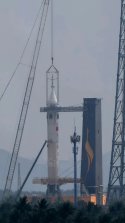
As opposed to what I said prior, it was indeed a Kuaizhou-11 that launched, we've never really seen a launch with that azimuth before from that location, so most people assumed it was a Long March 6, good to know they can launch that from the pad.

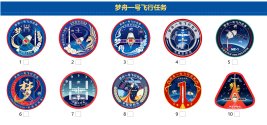
The payload was the Dier-5 and Xiwang-5 02, I have a lot of pictures and the mission patch to show below, but this launch was unique, they had to go for a lower inclination orbit and try to fit a larger fairing on it, which was available prior but never used.

Please, Log in or Register to view URLs content!

Please, Log in or Register to view URLs content!

There is the official post-launch blog and an article from Jack describing the launch.


(I got the Y numbering wrong on the Imgur link, disregard that)

This was the 86th launch in 2025 from China.
 

ZachL111

Junior Member
Registered Member
(I am going to start keeping launch threads separate, instead of grouping them together like I have done prior)

In other news, we had some back-and-forth of sorts between SpaceX and CAS Space on Twitter/X, regarding a close-call between a recently launched satellite from China and a Starlink satellite. Now, it is unknown which specific satellite orbited close to Starlink's, and I am not going to comment on the truthfulness of the statement at all, others have already speculated and will continue to do so, I am just providing the statements and factual nature of this.

The
Please, Log in or Register to view URLs content!
was basically saying this:
When satellite operators do not share ephemeris for their satellites, dangerously close approaches can occur in space. A few days ago, 9 satellites were deployed from a launch from the Jiuquan Satellite Launch Center in Northwestern China. As far as we know, no coordination or deconfliction with existing satellites operating in space was performed, resulting in a 200 meter close approach between one of the deployed satellites and STARLINK-6079 (56120) at 560 km altitude. Most of the risk of operating in space comes from the lack of coordination between satellite operators - this needs to change.
Alleging that the Kinetica-1 launch, which I covered prior here, dispatched a satellite that orbited within 200 meters of the Starlink satellite. Now, CAS Space did retweet with this
Please, Log in or Register to view URLs content!
as well, saying the following:
Our team is currently in contact for more details. All CAS Space launches select their launch windows using the ground-based space awareness system to avoid collisions with known satellites/debris. This is a mandatory procedure. We will work on identifying the exact details and provide assistance as the LSP.
And then following up with a retweet of their initial retweet with this
Please, Log in or Register to view URLs content!
, saying the following:
If confirmed, this incident occurred nearly 48 hours after payload separation, by which time the launch mission had long concluded. CAS Space will coordinate with satellite operators to proceed. This calls for re-establishing collaborations between the two New Space ecosystems.
Michael Nicolls, who made the original tweet, then sent this
Please, Log in or Register to view URLs content!
as a reply:
We appreciate the responsiveness and look forward to engaging in coordination for future launches. Establishing data sharing between all satellite operators is critical.

Now, all-in-all, this was actually a really professional encounter on both sides, but it does show the necessity for the United States to drop some of their restrictions on communications to Chinese space agencies, regulators, and overall private launch providers. Either way, CAS Space does have countless public (and private, I'm sure) debris avoidance techniques and communications.

As to which satellite is the culprit, I would not say for sure. I do think they'll investigate and release more information as soon as they have it.

Moving on, we should have more information on the ZQ-3 launches of Y2 and Y3 next year, it seems, and they've confirmed they will continue to attempt reusability (obviously) and have recovered the black box from the Y1 rocket, so they know exactly what went wrong.

Here are the comments this
Please, Log in or Register to view URLs content!
about the overall process and design, and other things of that nature.

[Chief Designer of Zhuque-3 Explains Details of First-Stage Recovery Verification on Zhuque-3's Maiden Flight] On December 3, the Zhuque-3 reusable launch vehicle, developed by LandSpace, successfully completed its maiden flight. The second-stage rocket successfully entered orbit, but the first-stage rocket recovery failed. This marks the first time in China that a first-stage recovery of an orbital-class launch vehicle has been attempted. Recently, a CCTV reporter conducted an exclusive interview with Zhang Xiaodong, the chief designer of the Zhuque-3, revealing for the first time key technical details of the Zhuque-3 recovery verification.

At noon on December 3, the Zhuque-3 ignited and lifted off. After approximately 133 seconds of flight, the first-stage rocket separated and conducted vertical recovery technology flight verification as planned.

Zhang Xiaodong, Chief Designer of the Zhuque-3 Reusable Rocket: "When we approached the highest point, the grid fins opened, then we re-entered the atmosphere. Then, the three re-entry engines ignited. This was the deceleration from 80 kilometers to 40 kilometers before entering the atmospheric phase. At the time, I thought it was quite perfect."

Zhang Xiaodong explained that the rocket's first stage underwent the most challenging phase for reusable rockets: the supersonic reentry aerodynamic glide. Simultaneously, the rocket achieved high-precision guidance and control towards the landing site during both the reentry ignition and aerodynamic glide phases. Unfortunately, a few kilometers above the ground, during the engine's final ignition, an abnormal combustion occurred, preventing a soft landing.

Zhang Xiaodong, Chief Designer of the Zhuque-3 Reusable Rocket: "For the second ignition, we adopted a relatively conservative design, believing there wouldn't be a major problem. However, the issue still arose in the final stage."

Although a soft landing wasn't achieved, Zhang Xiaodong told reporters that the Zhuque-3's recovery validated a significant amount of rocket reusability technology. The data accumulated during the flight laid a solid foundation for subsequent model iterations and improvements, exploring a feasible path for my country to achieve first-stage rocket recovery.

Zhang Xiaodong, Chief Designer of the Zhuque-3 Reusable Rocket: "The data is extremely important. We learned where we had excessive margins and where the design was inadequate." This is one of the advantages of reusable rockets. After this flight, we can continue to perform reusable flights in the next two or three missions. Upon return, besides further enriching the database, we can also see in-situ where parts were burned or where the design was too demanding, allowing us to reduce weight and optimize to improve rocket performance.

Although the Zhuque-3 failed to successfully recover its first stage, its maiden flight was successfully completed. The Zhuque-3 achieved many domestic "firsts," such as the first integrated application of a nine-engine parallel liquid oxygen-methane propulsion system, the first stainless steel rocket body, and the first high-precision return flight verification of an orbital-stage reusable launch vehicle. So what does the Zhuque-3 rocket look like? Before its maiden flight, reporters conducted an exclusive close-up look.

CCTV reporter Cui Xia: The Zhuque-3 is 66 meters high and 4.5 meters in diameter. The entire rocket body is made of stainless steel. It is also currently China's first reusable launch vehicle.

Zhang Xiaodong, chief designer of the Zhuque-3 reusable launch vehicle, explained: "Stainless steel was chosen because it's suitable for large-scale production and has good reusability. The launch tower is currently 90 meters high, and the rocket will be further lengthened in the future to increase its carrying capacity. The engine's thrust will be expanded from 80 tons to 100 tons, ultimately achieving a takeoff thrust of 900 tons."

During descent, the rocket needs to deploy its landing legs to land on the launch pad. Above the landing legs are leading-edge extensions (LES), used to provide lift during reentry. The four fins on top are grid fins used to adjust the rocket's attitude during atmospheric reentry glide.

Regarding the Zhuque-3's carrying capacity, Zhang Xiaodong explained that the rocket's current state is an intermediate version. Its single-use carrying capacity is approximately 13-14 tons, while reusable versions can reach 10 tons, depending on the specific orbit.

The most striking feature of the Zhuque-3 is its stainless steel body and liquid oxygen/methane fuel. This power and structural combination is a first in China and lays the foundation for the rocket's reusability. Why choose this combination?

Entering LandSpace's assembly and testing facility, the massive body of the Zhuque-3 comes into view. Its most striking feature is its unpainted stainless steel body, a stark contrast to the white-painted rockets we are familiar with.

Had to cut off the article due to no space. Will write another reply with more news if I find anything.
 

ZachL111

Junior Member
Registered Member
(I am going to start keeping launch threads separate, instead of grouping them together like I have done prior)

In other news, we had some back-and-forth of sorts between SpaceX and CAS Space on Twitter/X, regarding a close-call between a recently launched satellite from China and a Starlink satellite. Now, it is unknown which specific satellite orbited close to Starlink's, and I am not going to comment on the truthfulness of the statement at all, others have already speculated and will continue to do so, I am just providing the statements and factual nature of this.

The
Please, Log in or Register to view URLs content!
was basically saying this:

Alleging that the Kinetica-1 launch, which I covered prior here, dispatched a satellite that orbited within 200 meters of the Starlink satellite. Now, CAS Space did retweet with this
Please, Log in or Register to view URLs content!
as well, saying the following:

And then following up with a retweet of their initial retweet with this
Please, Log in or Register to view URLs content!
, saying the following:

Michael Nicolls, who made the original tweet, then sent this
Please, Log in or Register to view URLs content!
as a reply:


Now, all-in-all, this was actually a really professional encounter on both sides, but it does show the necessity for the United States to drop some of their restrictions on communications to Chinese space agencies, regulators, and overall private launch providers. Either way, CAS Space does have countless public (and private, I'm sure) debris avoidance techniques and communications.

As to which satellite is the culprit, I would not say for sure. I do think they'll investigate and release more information as soon as they have it.

Moving on, we should have more information on the ZQ-3 launches of Y2 and Y3 next year, it seems, and they've confirmed they will continue to attempt reusability (obviously) and have recovered the black box from the Y1 rocket, so they know exactly what went wrong.

Here are the comments this
Please, Log in or Register to view URLs content!
about the overall process and design, and other things of that nature.


Had to cut off the article due to no space. Will write another reply with more news if I find anything.
Rest of the article below.
Choosing stainless steel is the first distinctive feature of the Zhuque-3.

Zhang Xiaodong, Chief Designer of the Zhuque-3 Reusable Launch Vehicle: We chose stainless steel because it is more robust and durable, maintaining excellent performance even after repeated cycles of force and heat shock.

Stainless steel has a natural advantage in this regard: high strength, good heat resistance, excellent structural lifespan, and lower raw material costs ensure the rocket's reusability and economic viability.

The second key choice for the Zhuque-3 is its fuel. The Zhuque-3 chose liquid oxygen/methane.

Zhang Xiaodong, Chief Designer of the Zhuque-3 Reusable Launch Vehicle: Methane is the liquefied natural gas we use for cooking at home. Once the gas valve is turned off, there's practically no residue because its combustion products are only carbon dioxide and water.

Methane has a simpler composition, resulting in more complete and cleaner combustion. More importantly, methane's cooling properties and ignition characteristics are more suitable for reuse; it's easy to ignite, providing an inherent advantage for multiple reliable ignitions during reentry.

Zhang Xiaodong, Chief Designer of the Zhuque-3 Reusable Launch Vehicle: From its ease of use and its five key characteristics, methane is the preferred propellant for next-generation reusable launch vehicles.

Not only domestically, but also internationally, reusable rockets are considered the mainstream for future development. At the beginning of the 14th Five-Year Plan period, the China National Space Administration organized the development of a liquid oxygen-methane reusable launch vehicle. So what are reusable rockets, and why develop them?

As the name suggests, reusable rockets, as opposed to scalable rockets, are rockets that, after completing their planned launch mission, can return to Earth, either wholly or partially, and land safely. After maintenance and refueling, they can be launched again.

Compared to scalable rockets, reusable rockets incorporate four key technologies: accurate landing, stable landing, durability, and rapid repair. In recent years, my country has begun constructing its low-Earth orbit (LEO) satellite internet constellation. The constellation of tens of thousands of satellites has placed demands on rocket launch frequency and cost.

Yang Yuguang, Chairman of the Space Transportation Committee of the International Astronautical Federation, stated: "The massive LEO internet access service constellation requires us to have the capability to send hundreds or even thousands of tons of satellites into orbit annually. Therefore, this creates a very urgent need to reduce launch costs, which is the most important driving force behind China's development of reusable rockets."

Reusable rockets are one of the important development directions for future space exploration. Achieving goals such as low cost and high efficiency requires overcoming many technical challenges. To accelerate the development of high-performance, low-cost, and high-frequency reusable launch vehicles, at the beginning of the 14th Five-Year Plan period, the China National Space Administration (CNSA) organized the development of a liquid oxygen-methane reusable launch vehicle. For the first time, commercial space companies such as LandSpace were included as the main contractors, innovating the R&D support model and meticulously organizing the project to promote the development of reusable launch vehicle technology in my country. After several years of development, the rocket has entered the "second-stage orbit insertion, first-stage recovery" testing phase.

Yang Yuguang, Chairman of the Space Transportation Committee of the International Astronautical Federation, stated: "Successful recovery is only the first step. We must then achieve successful reuse and ensure cost reduction throughout the entire chain. Only when our launch costs are reduced will it bring a revolutionary impact to our space industry." (CCTV)

No real large news as far as I can tell, just awaiting launch on the 15th, it seems we might hit 90 launch attempts this year which I didn't even think was possible earlier this month.
 

tankphobia

Senior Member
Registered Member
(I am going to start keeping launch threads separate, instead of grouping them together like I have done prior)

In other news, we had some back-and-forth of sorts between SpaceX and CAS Space on Twitter/X, regarding a close-call between a recently launched satellite from China and a Starlink satellite. Now, it is unknown which specific satellite orbited close to Starlink's, and I am not going to comment on the truthfulness of the statement at all, others have already speculated and will continue to do so, I am just providing the statements and factual nature of this.

The
Please, Log in or Register to view URLs content!
was basically saying this:

Alleging that the Kinetica-1 launch, which I covered prior here, dispatched a satellite that orbited within 200 meters of the Starlink satellite. Now, CAS Space did retweet with this
Please, Log in or Register to view URLs content!
as well, saying the following:

And then following up with a retweet of their initial retweet with this
Please, Log in or Register to view URLs content!
, saying the following:

Michael Nicolls, who made the original tweet, then sent this
Please, Log in or Register to view URLs content!
as a reply:


Now, all-in-all, this was actually a really professional encounter on both sides, but it does show the necessity for the United States to drop some of their restrictions on communications to Chinese space agencies, regulators, and overall private launch providers. Either way, CAS Space does have countless public (and private, I'm sure) debris avoidance techniques and communications.

As to which satellite is the culprit, I would not say for sure. I do think they'll investigate and release more information as soon as they have it.

Moving on, we should have more information on the ZQ-3 launches of Y2 and Y3 next year, it seems, and they've confirmed they will continue to attempt reusability (obviously) and have recovered the black box from the Y1 rocket, so they know exactly what went wrong.

Here are the comments this
Please, Log in or Register to view URLs content!
about the overall process and design, and other things of that nature.


Had to cut off the article due to no space. Will write another reply with more news if I find anything.
Passing within 200m is basically point blank range, really fortunate that no collision occured. As similar mega constellation of LEO communication satellites continue to proliferate, risk of collision can only increase.
 

ZachL111

Junior Member
Registered Member

I apologize if this has already been posted, but this is a new rocket company in China that I just saw Andrew Jones posted, I've been tracking them since August, but I figured since he posted, I should put it here too.

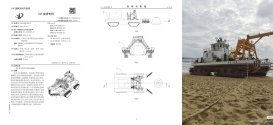
Their name is 北京领航星箭科技有限公司 (Linghang Xingjian Technology Co., Ltd.) and they want to produce the 星舟一号 (Xingzhou-1) with some sort of intelligent grid and net recovery system. They were established on the 20th of June, this year, and work in a large amount of industries, or at least they will likely.

They're recruiting for very senior roles on their job postings, and they've mostly just got PR out for now on what they want to do. They want to use a net-frame, basically a grid, to catch rockets versus landing leg systems like the ZQ-3 or CZ-12A, and their rocket itself has two variants, a base model of 3.5 tons to 500km SSO, with a target price of under 7000 Yuan per kilo, and another configuration of the same rocket? with CBC, there is no more real detail on this variant, other than it should be 7.1 tons to 700km SSO.

They are also claiming some sort of AI assistant to have, a digital twin sort of program for the rocket design, with intelligent control, reusability, and rapid inspection and maintaining capabilities. They claim to want to have a first flight by December 2027, which is ambitious at best, as Andrew also put it.

Please, Log in or Register to view URLs content!

I was reading this article, which was interesting, to say the least. Basically, Wang Wenjie, GM of 中国航天科技集团商业火箭有限公司, was giving a keynote speech and discussed how Chinese commercial rocket companies should shift from isolation to coordination, and I believe this is how the launch industry will go from now on, both based on government policy, and private efforts.

Please, Log in or Register to view URLs content!

Also read this article, Guoxing Yuhang and Shanghai Jiao Tong University have signed a cooperation agreement to build the first Chinese space computing joint lab. The research areas with be space computing chips, robotic satellites, and in-orbit additive manufacturing. They want to build a space-computing network, as the name states, and this is a great push between industry and academia in my opinion.

Please, Log in or Register to view URLs content!

Also saw this rare abnormal trading volatility announcement, basically on the risks of commercial space data centers. It's warning against (which might also be relevant for authorities) over-reliance on the commercial/money-making push that enterprise tends to undergo, and speaks on the risks of radiation, orbital maintenance, debris hazards, data-governance issues, and space-traffic regulation, giving a likely 5 years or more to show actual commercial value. It also mentions it may take 5-10 years before these systems actually compete with ground-based data centers.
 
Last edited:
Top